
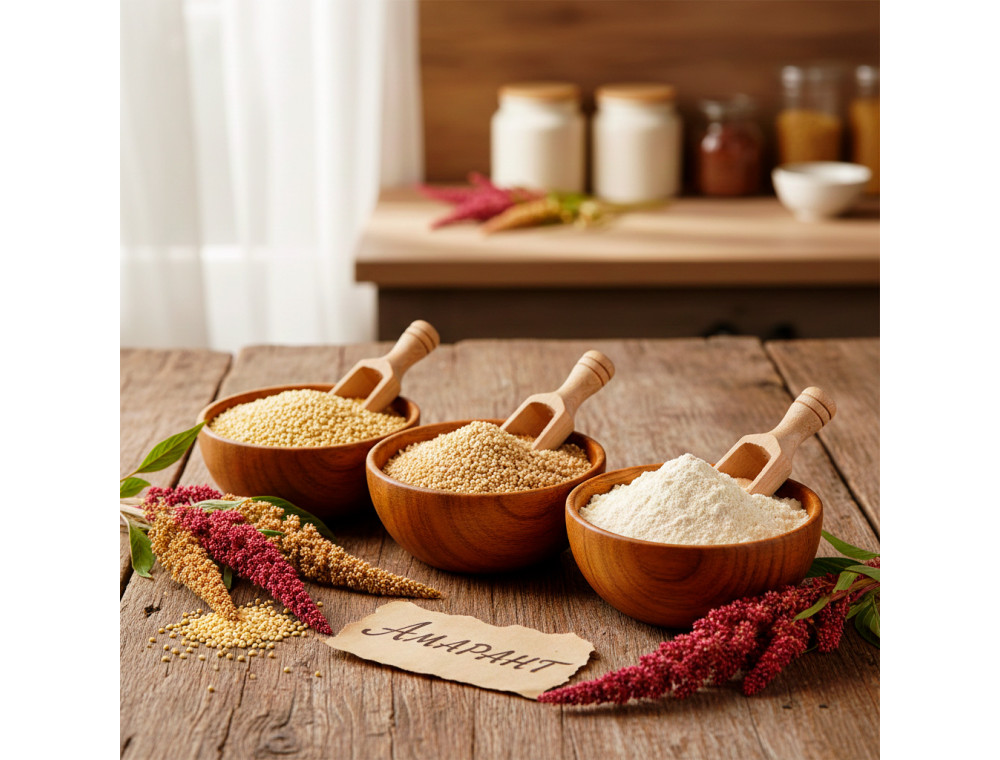
Amaranth is a remarkable plant that has rapidly gained popularity in recent years due to its exceptional nutritional properties. From whole grain to flour, each form of amaranth possesses unique characteristics and specific culinary uses. Let’s explore the differences and the common traits between them.
Whole Grain Amaranth
Whole grain amaranth consists of tiny, light-colored seeds that serve as the primary source of all its nutrients. It has a delicate, slightly nutty flavor and a pleasant crunchy texture.
Features: It retains the maximum amount of fiber, protein, essential amino acids (especially lysine), vitamins, and minerals. It has a low glycemic index, which is crucial for maintaining stable blood sugar levels.
Usage: Ideal for preparing side dishes, adding to soups, salads, and baked goods to boost nutritional value. It can be sprouted or cooked similarly to quinoa.
Commonality: It is the base product from which all other forms are derived.
Ground Amaranth (Grits)
Ground amaranth, or amaranth grits, is produced by coarsely milling the whole grain. This is an intermediate option that combines the benefits of the whole product with cooking convenience.
Features: The crushing process breaks down the tough outer shell, which speeds up cooking time. Despite the processing, most vitamins, minerals, and proteins remain intact.
Usage: Excellent for making creamy porridges, baby food, and casseroles, or as a binding agent for veggie burgers and meatloaves.
Commonality: The rich protein profile and characteristic amaranth aroma are preserved just as they are in the whole grain.
Amaranth Flour
Amaranth flour is a fine-milled product. It has a creamy tint and a specific, slightly sweet flavor with herbal undertones.
Features: This is one of the most valuable types of gluten-free flour. It contains high concentrations of iron, magnesium, calcium, and squalene (a powerful antioxidant). Note that since it lacks gluten, baked goods made solely from amaranth flour can be quite dense.
Usage: Widely used in dietary and gluten-free baking (pancakes, muffins, cookies), for thickening sauces and gravies, and in the production of protein bars. It is often mixed with other flours to improve the structure of the dough.
Commonality: Like the grain itself, the flour remains a high-protein product with a complete amino acid profile.
Specialist’s Summary
The choice of amaranth form depends entirely on your culinary goals. If you are looking for texture and maximum fiber, choose whole grain. For a quick and nutritious breakfast, ground grits are the better option. And for creating healthy desserts and pastries, amaranth flour is an indispensable pantry staple.
All these products share one common trait: a unique biochemical composition that makes amaranth a true "superfood" of the 21st century.