
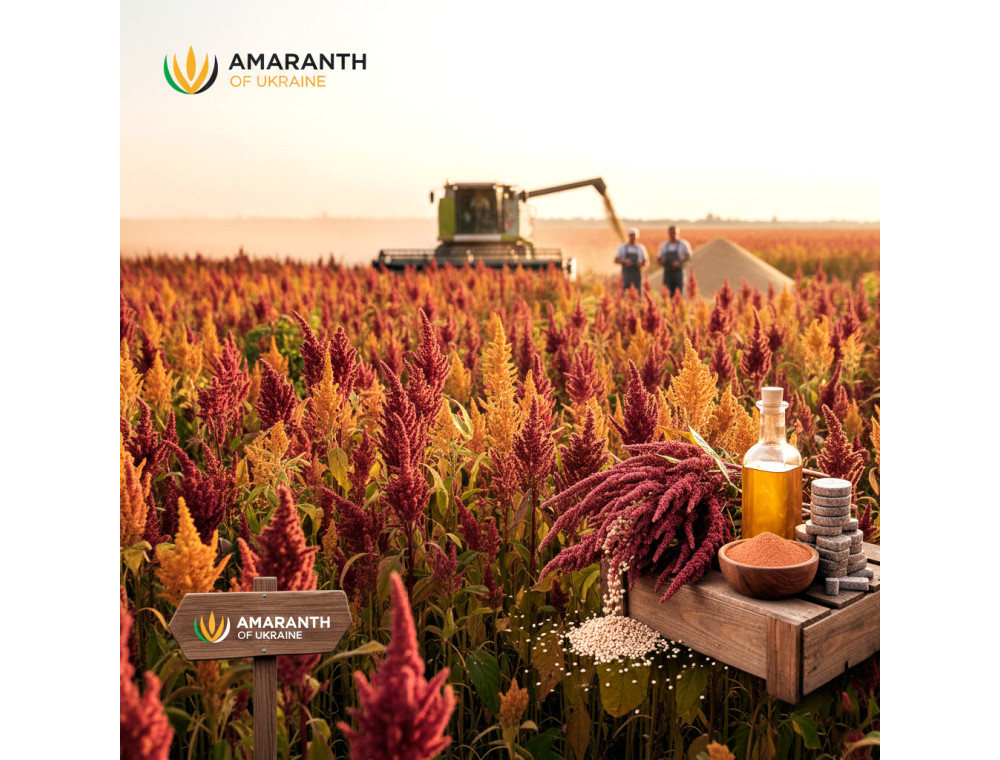
Amaranth: The Golden Grain and Its Agribusiness Prospects
Every part of this plant — roots, stems, leaves, flowers, and seeds — is valuable in its own way. It is used in medicine, cosmetology, and cooking, as well as a sustainable energy source. Amaranth is resilient, in high demand, and highly profitable. In short, it is exactly what a farmer needs when transitioning from a "gardening hobby" to a serious agribusiness.
Amaranth is an annual herbaceous plant used globally as a vegetable and grain crop, a medicinal ingredient, and a high-quality fodder plant.
The Seminar in Mykolaiv and the "Amaranth of Ukraine" Experience
During the seminar "Technology for Growing Saffron and Other Profitable Crops" in Mykolaiv, Viktor Deinega, Director of "Amaranth of Ukraine," introduced farmers to this promising crop, its cultivation techniques, and market opportunities.
The company is based in the Veselynove district of the Mykolaiv region. On 60 hectares, they produce both commercial grain and high-quality seeds for six varieties of this "Golden Grain of God." The yield figures are impressive:
Green mass: 200–250 tons per hectare.
Grain: up to 5 tons per hectare.
Net profit: 50,000–60,000 UAH per hectare.
"A modern farmer should pay attention to niche crops like amaranth," says Viktor Deinega. "Even without vast land holdings, you can earn significantly more than with traditional crops. I recommend a full-cycle approach: cultivation, processing, and sales—rather than just selling raw materials at a low price."
Unique Properties of Amaranth Oil
"Amaranth of Ukraine" produces flour, oil, and herbal teas, all of which see rapid turnover. Amaranth oil deserves special attention due to its unique composition: magnesium, potassium, phosphorus, iron, essential amino acids, Vitamin B6, and other bio-active substances.
The standout feature is the high concentration of squalene (8%), a powerful antioxidant. Amaranth oil serves as an effective preventive anti-tumor agent and a potent immunostimulant. It is also used to prevent and treat cardiovascular diseases.
Livestock and Renewable Energy
Viktor Deinega emphasizes that amaranth is a cost-effective yet premium feed for livestock. The company has established the production of natural bio-feeds (herbal flour and pellets) for poultry, cattle, pigs, and rabbits. Currently, global demand for amaranth-based bio-feed far exceeds available supply.
Additionally, dry amaranth granules are used as fuel pellets. The company heats its own production facilities with them throughout the winter. According to Deinega, amaranth is an affordable source of renewable energy and a viable alternative to expensive natural gas
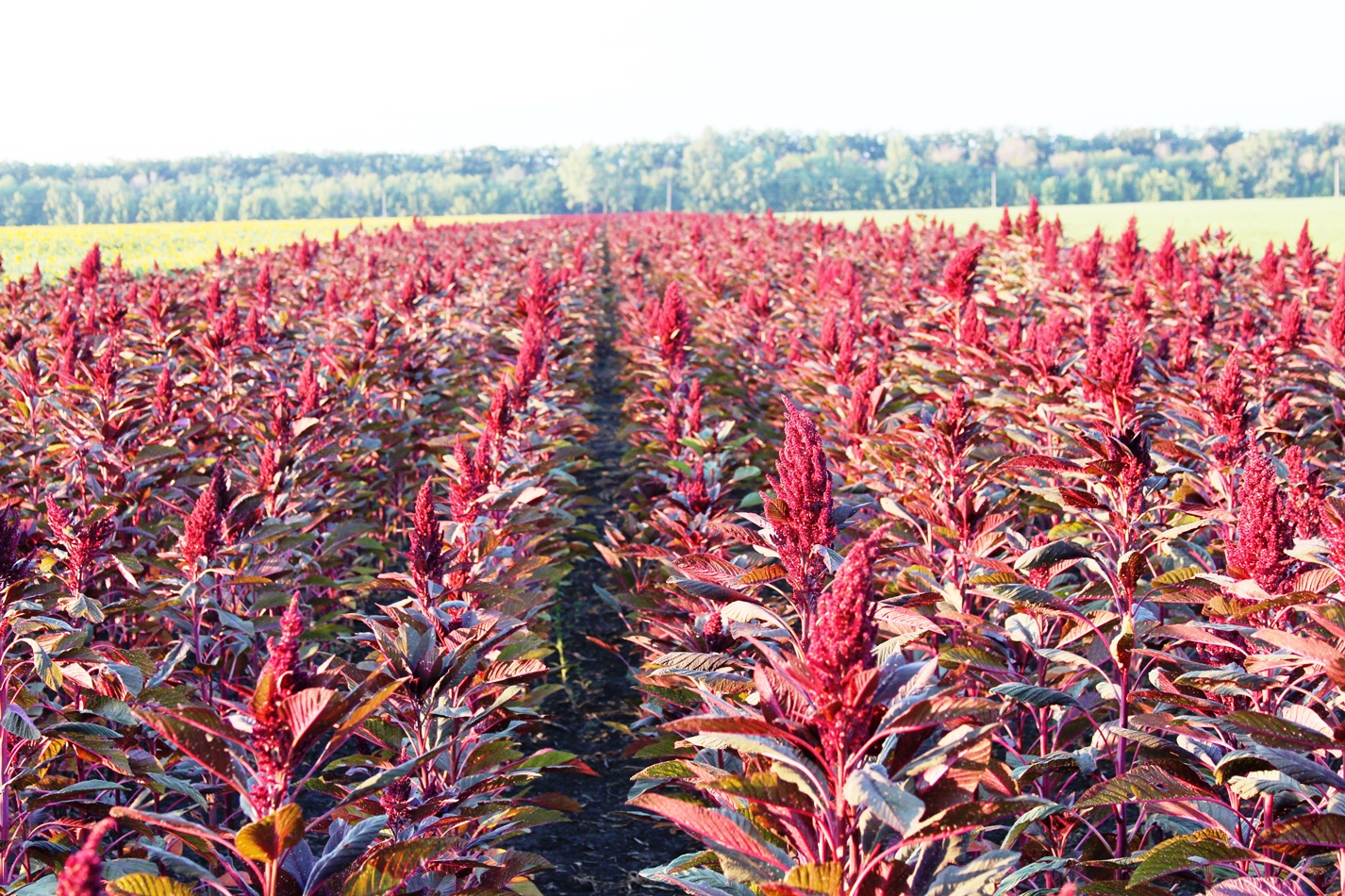
Cultivation and Global Market
The cultivation technology is straightforward and similar to that of corn or sunflowers:
Preparation: Soil plowing in autumn.
Planting: Performed once nights become consistently warm. Amaranth thrives in heat and is drought-resistant.
Seeding rate: 1 kg of seeds per hectare (70 cm row spacing) or 1.5 kg (45 cm row spacing).
Protection: "Bi-58 New" is used during the sprouting phase to control aphids and flea beetles.
Harvesting: Conducted using standard combine harvesters.
The market for amaranth products is well-established. The company exports to Israel, China, the EU, the USA, Kazakhstan, Georgia, and Moldova. One ton of amaranth yields 30 to 60 liters of oil, with an international market value of $100–$120 per liter.

Comments:


