Amaranth Oil: How to Choose a Genuine Healing Product and Avoid Counterfeits
Amaranth oil is a unique product renowned for its exceptional healing properties. While this plant was relatively unknown a few decades ago, the market is now flooded with amaranth products. However, it is important to realize that not all manufacturers prioritize the quality of their product or the health of their customers.
Frequently, products labeled "Amaranth Oil" are not what they claim to be, and their therapeutic effects are non-existent. This leads to the misconception that amaranth is not effective. In this article, we will take a detailed look at what is actually sold under the guise of amaranth oil and how to distinguish a fake from a high-quality, genuine product.
Raw Material Quality: The Foundation of Efficacy
The quality of the final product depends entirely on the quality of the raw materials. Even though the source is always amaranth grain, the cultivation conditions can vary significantly:
Ecological Purity. If chemical fertilizers are used to increase yield, the plant accumulates active chemical compounds. Such amaranth can no longer be called eco-friendly. Mechanical weed control is much more expensive than using herbicides, but it is the only way to ensure premium quality.
Cleaning and Calibration. Amaranth seeds are extremely small. During harvesting, weed seeds (like pigweed) often mix in, many of which can be harmful. The most effective cleaning method is grain calibration. While this results in higher loss of smaller grains, it ensures that only the highest quality, pure raw material remains.
Production Technologies: From "Placebos" to Medicine
Amaranth grain is a low-oil raw material, meaning it requires significant effort to extract the oil. To cut costs, some manufacturers move away from standard cold-pressing methods in favor of cheaper, industrial processes.
1. Organic Solvent Extraction (Hexane)
This method involves dissolving the oil out of the grain using chemical solvents (most commonly hexane).
The Problem: It is impossible to completely remove the solvent from the oil.
Verdict: This oil is toxic and unsuitable for human consumption or cosmetic use.
2. Oil Maceration (Infusion)
The most common method for cheap "amaranth oil." The seeds are simply soaked in a carrier oil, such as sunflower or corn oil, to extract the squalene.
The Result: A solution containing less than 1% squalene.
The Drawback: During processing, squalene reacts with air and turns into squalane. While squalane is useful in cosmetics, it lacks the potent healing properties of pure squalene.
3. $CO_2$ Extraction (Liquid Carbon Dioxide)
Often marketed as "eco-friendly," this high-pressure method is actually detrimental to amaranth. Under high pressure, $CO_2$ reacts with the moisture in the grain to create carbonic acid, which alters the chemical structure of squalene.
The Result: A thick, waxy substance that is usually diluted with cheap oils and flavored with additives to mimic real amaranth.
4. First Cold-Press Method
This is the only method that yields truly natural amaranth oil with a high squalene content (up to 9%).
Why it's rare: It is the most expensive method because the oil yield is very low, requiring a vast amount of raw material.
Crucial Factor: The grain is pressed without heating. Heat causes squalene to oxidize rapidly, destroying its health benefits.
How We Produce Our Amaranth Oil
We oversee the entire process from the field to the bottle:
Pesticide-Free Farming: We grow amaranth from our own seeds without herbicides or pesticides.
German Engineering: We use specialized, high-tech equipment designed for low-oil crops that keeps temperatures below 40°C ($104°F$).
Rapid Processing: Each batch is produced within an 8-hour shift to prevent oxidation.
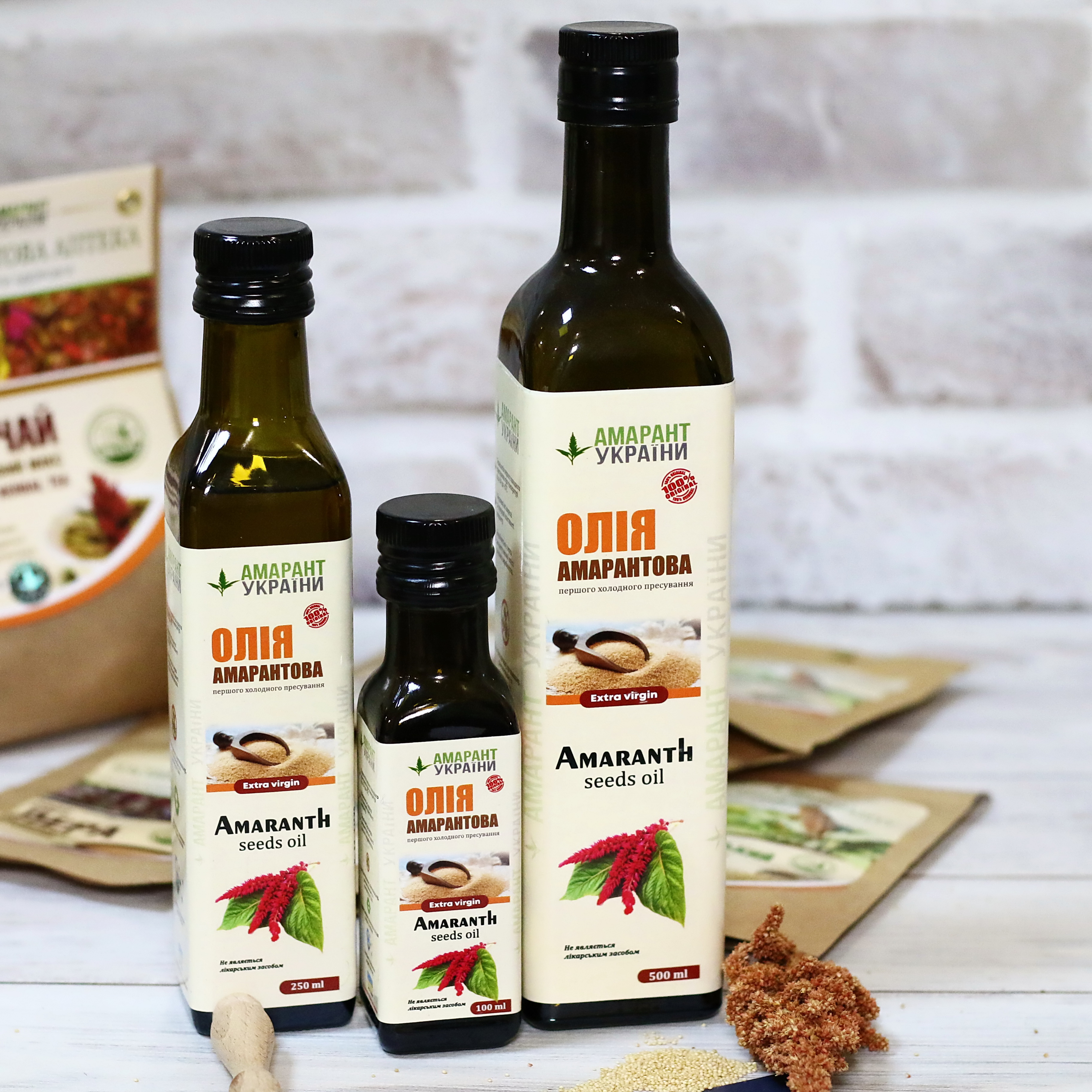
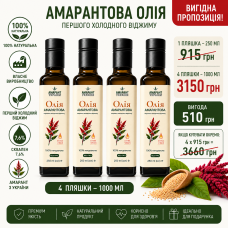
Protective Packaging: We use dark glass bottles with sealed caps. Sunlight is the primary enemy of squalene, and our packaging ensures its preservation. We guarantee a minimum squalene content of 6% in every batch.
Why We Offer 100ml, 250ml, and 500ml Sizes
Squalene is highly sensitive to oxygen.
100ml – 250ml: The best option for personal use. You will finish the bottle before the frequent opening causes the oil to oxidize.
500ml: Recommended for families or for intensive skin treatments (amaranth oil is famous for its rapid skin-rejuvenating effects).
Note: If you see large-volume containers sold as "natural cold-pressed amaranth oil," be cautious. It is likely either a low-squalene extract or will lose its potency long before you finish the bottle.
Understanding the Price
Let's look at the math:
High-quality cleaned amaranth grain costs roughly $1.50 - $2.00 per kg.
Cold-pressing yields only 25–30g of oil per 1kg of grain.
To produce 100ml of oil, we need approximately 3.5kg of grain.
Adding the costs of glass packaging, electricity, labor, and certification, it becomes clear that genuine oil cannot be cheap.
Conclusion: We are the direct producers. By growing our own raw materials and eliminating middlemen, we offer the most competitive price for authentic, high-concentration amaranth oil.
Invest in your health with the real power of Amaranth.