

Classic Amaranth Cultivation Technology: Over 30 Years of Experience
Amaranth is a high-yielding crop that rewards growers only when strict technological protocols are followed. Based on our extensive experience, we have prepared this step-by-step guide for farmers and agricultural enterprises.
1. Crop Rotation & Precursors
The best yields are achieved when amaranth follows:
Black or green fallow;
Cereals and legumes.
2. Soil Preparation
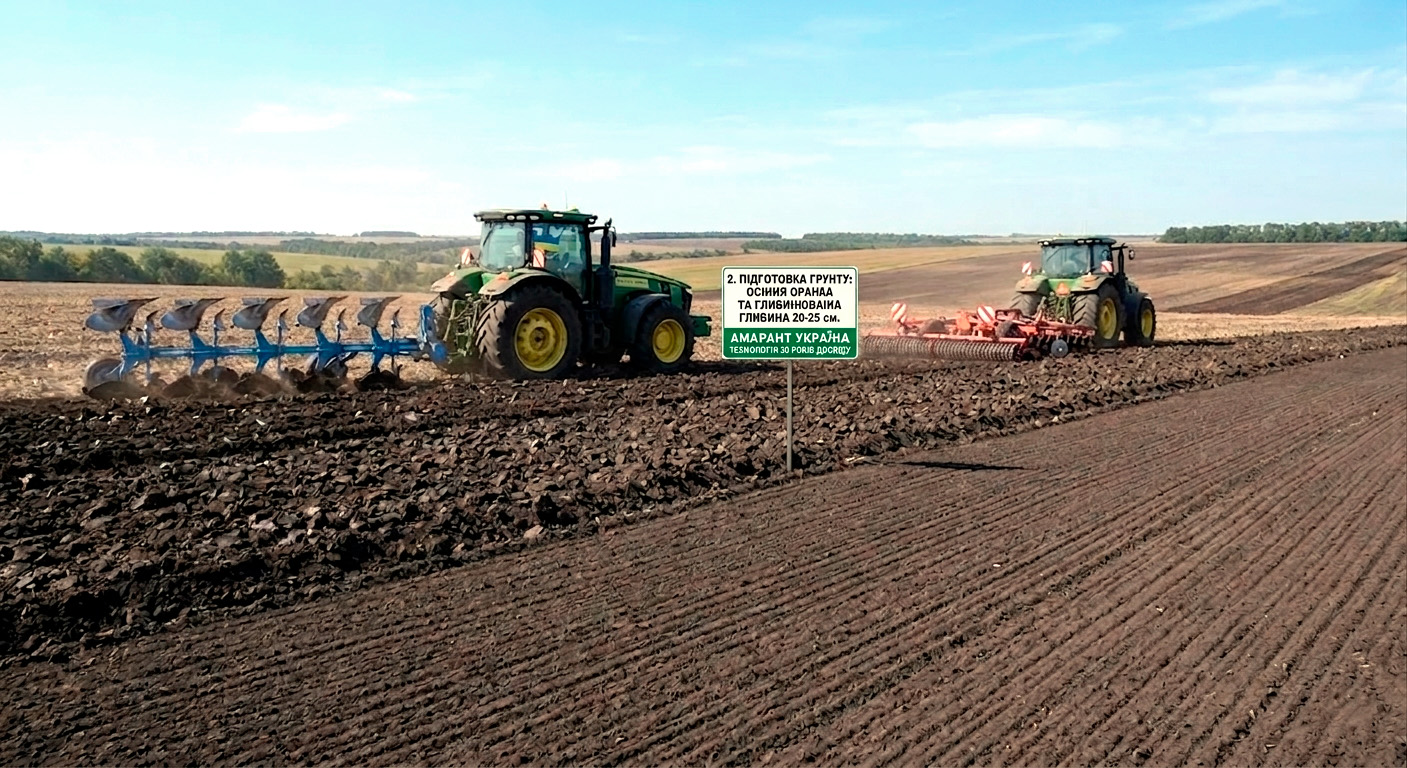
Autumn Preparation (Primary)
Weed Control: Treatment with non-selective herbicides based on glyphosate (e.g., Roundup).
Primary Tillage: Plowing to a depth of 20–25 cm. Plowing consistently yields better results compared to disc harrowing.
Perennial Weed Control: If the field is infested with creeping thistle or field bindweed, repeat glyphosate treatment (3–5 L/ha) after discing once weeds emerge. In late autumn, perform deep cultivation with harrowing to level the surface.
Spring Preparation (Pre-sowing)
Moisture Conservation: Early spring harrowing.
Cultivation: First pass — deep cultivation to eliminate early weeds. Second pass (pre-sowing) — to a depth of 3–5 cm to create a firm "seedbed."
Compaction: Immediately after pre-sowing cultivation, the field must be rolled with ring-pit or sprocket packers.
3. Sowing: Timing and Rates
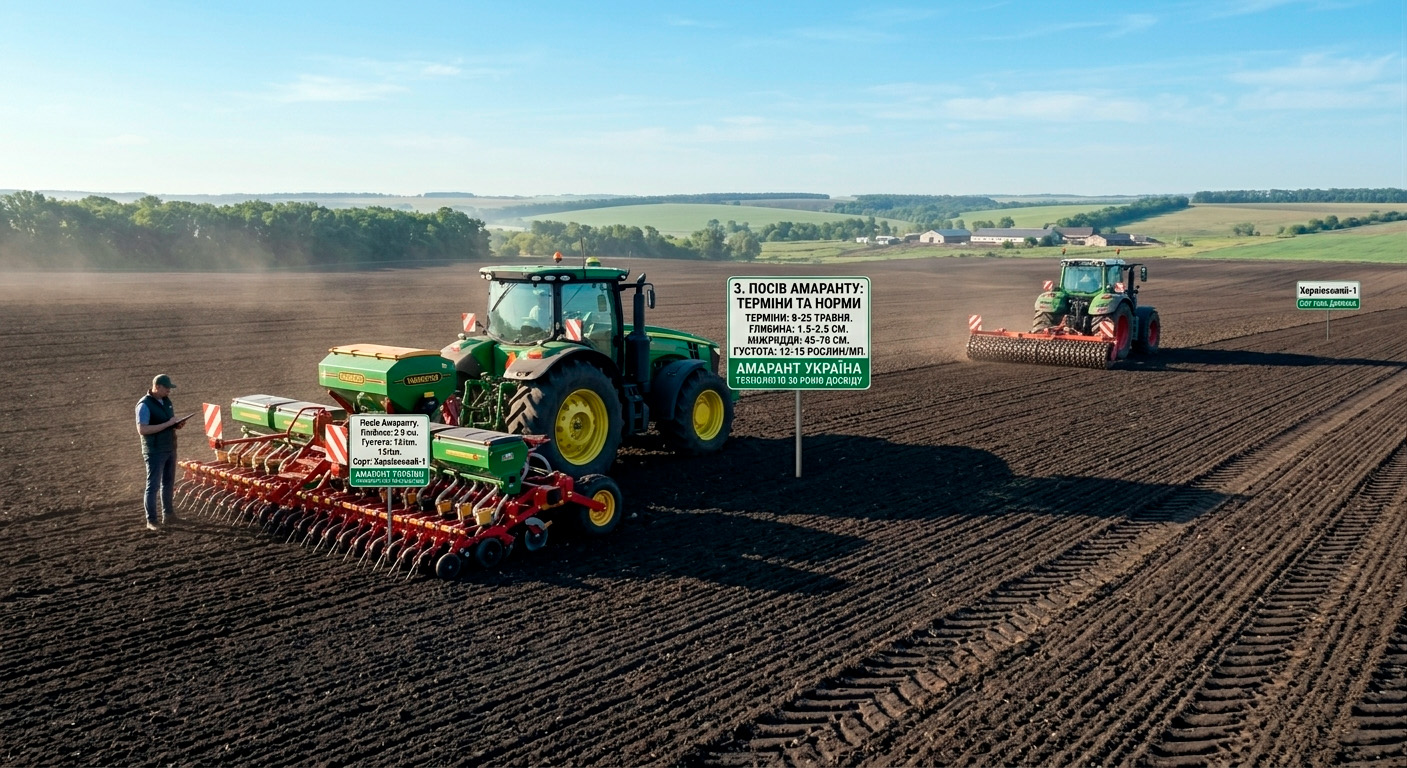
Amaranth is a light- and heat-loving plant. Sowing should begin when the soil temperature reaches +12–16°C.
| Parameter | Recommended Value |
| Sowing Window | May 8 to May 25 (Optimal period) |
| Sowing Depth | 1.5 – 2.5 cm (Maximum 3 cm) |
| Row Spacing | 45 – 70 cm |
| Plant Density | 12–15 plants per linear meter |
| Soil Moisture | Sow in moist or dry soil before rain (Avoid "semi-moist" conditions) |
Sowing Equipment:
Pneumatic precision drills (UPS, KLEN, etc.) — disc hole diameter: 0.6–0.7 mm.
Grain or grass drills (SZ, SON) — seeds must be mixed with a filler (dry sifted soil) in a 1:10 ratio.
Manual seeders (Vinnichanka, SRT types).
4. Crop Maintenance and Nutrition
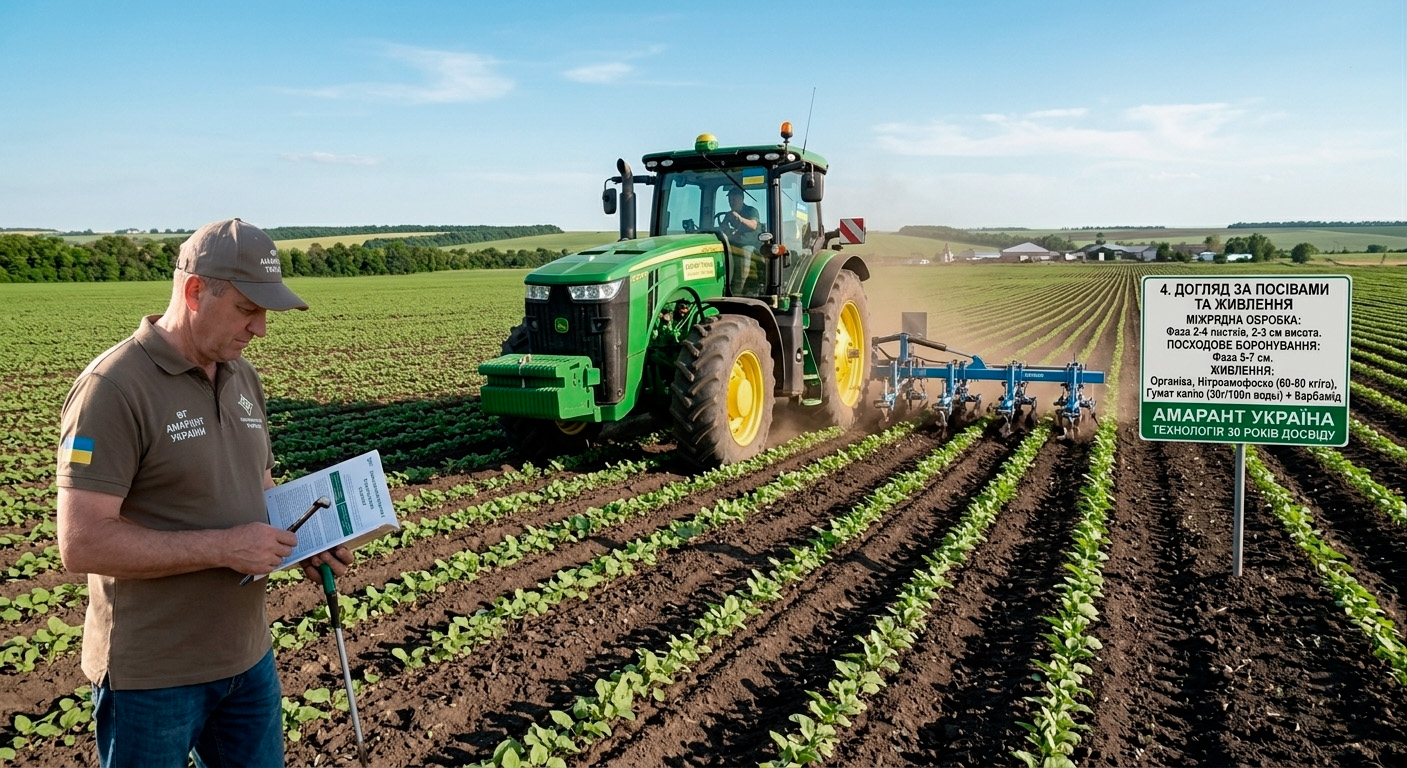
Inter-row Cultivation & Harrowing
First Inter-row Cultivation: Performed at a plant height of 2–3 cm (2–4 true leaf stage) at low speed.
Post-emergence Harrowing: Performed at a height of 5–7 cm using spring or rotary hoes across the rows in sunny weather (when plants are most flexible). This destroys weeds in the "white thread" stage and improves soil aeration.
Fertilization
Organic Matter: The best and safest option for amaranth.
Mineral Fertilizers (at sowing): NPK or Ammophos (60–80 kg/ha).
Foliar Feeding: Potassium humate (30g per 100L of water) + micronutrient complex + Urea (5 kg/ha).
5. Pest and Disease Protection
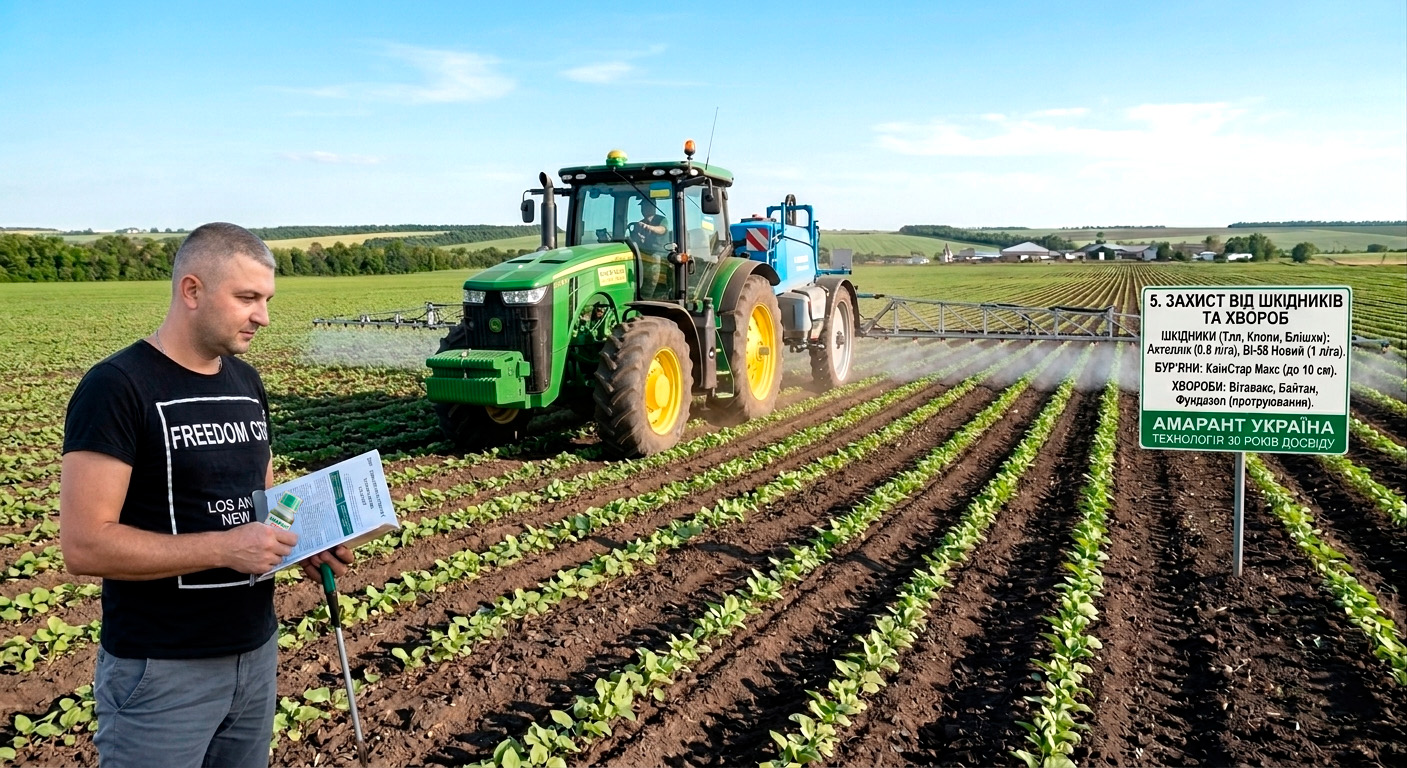
Weeds: For grass weeds (couch grass), use QuinStar Max (or analogs) when weeds reach 10 cm in height.
Pests (Aphids, Lygus bugs, Flea beetles): Actellic (0.8 L/ha), BI-58 New (1 L/ha), or Karate Zeon (0.15 L/ha) during the "cotyledon" stage.
Diseases: In cold or overly wet soil, fungal infections may occur. Seed treatment with Vitavax or Fundazol is highly recommended.
Critical Note: Monitor for wild pigweed (Amaranthus retroflexus) and lambsquarters near the fields. Cross-pollination leads to the appearance of black seeds (varietal degradation), which significantly devalues the harvest and oil quality.
6. Harvesting and Post-Harvest Processing
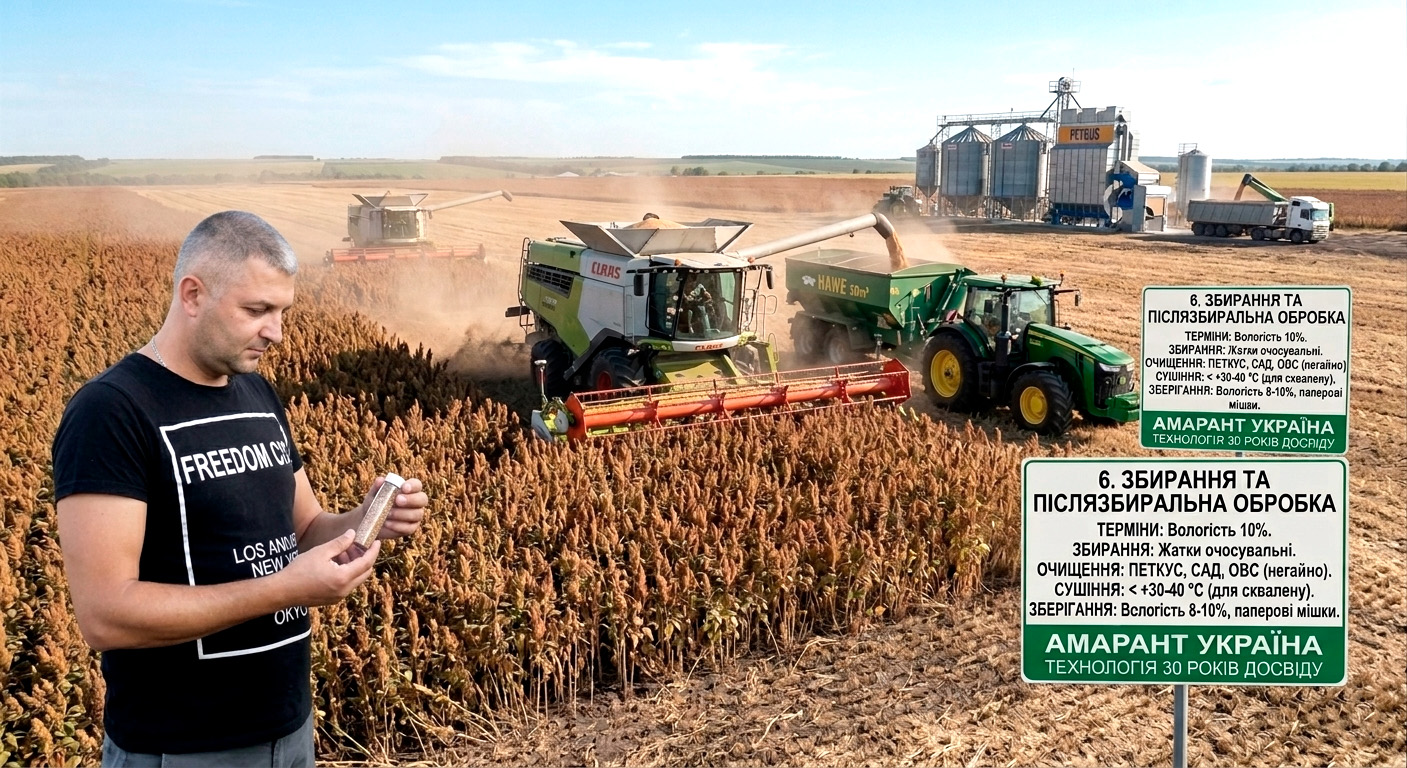
Amaranth grain is a "living" protein that can quickly overheat ("burn") in the harvester bin.
Maturity Indicators: Panicles change to their characteristic color, leaves dry out, and seeds become hard when bitten. Target moisture: 10%.
Harvesting: Combine harvesters equipped with rapeseed headers or stripper headers. Ensure the combine is completely sealed!
Cleaning: Immediately after harvesting (using PETKUS, SAD, or OVS machines).
Drying: Heat carrier temperature must not exceed +30–40°C. This is vital to preserve the squalene content.
Storage: Moisture 8–10%, stored in three-layer paper bags in a dry, ventilated facility.
Economic Efficiency:
Amaranth is an exceptionally rewarding crop. With high organizational standards at every stage—from soil preparation to the sale of clean grain—it provides profitability levels that are difficult to achieve with traditional crops.


