
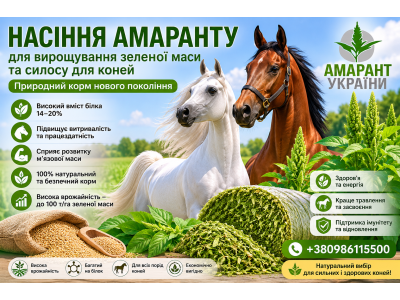
Amaranth Seeds for Growing Green Forage and Silage for Horses: A Natural Feed of the New GenerationAmaranth – A High-Yield Forage Crop for Horse BreedingModern horse breeding requires high-quality, safe, and nutritious feeds that support health, endurance, and excellent physical condition. One of the most promising forage crops is amaranth, a plant known for its exceptional nutritional value and high green biomass yield.Amaranth is successfully used for producing silage, haylage, and fresh green forage for ordinary horses, Arabian horses, sport horses, and breeding stock.Why Choose Amaranth?Compared with corn, alfalfa, and many traditional forage crops, amaranth offers several important advantages.Benefits of Amaranth Silage✅ High protein content – 14–20%✅ Higher lysine content than most cereal crops✅ Excellent digestibility of nutrients✅ Rich in calcium, magnesium, phosphorus, and iron✅ Contains natural antioxidants✅ Highly palatable to horses✅ Supports healthy muscle development✅ Imp..
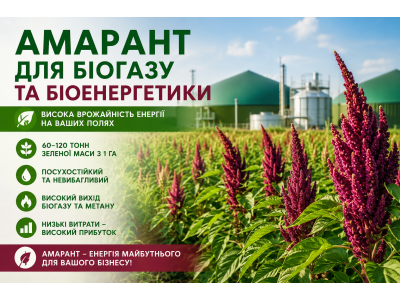
Amaranth for Bioenergy: A Promising Energy Crop for Biogas ProductionAmaranth – A New Source of Green EnergyAs the renewable energy sector continues to grow, farmers and energy producers are increasingly looking for crops capable of delivering high biomass yields and efficient biogas production. One of the most promising options is amaranth — a unique crop that combines high productivity, adaptability to various growing conditions, and exceptional energy potential.Today, amaranth seeds for green biomass production are becoming a profitable investment for farms supplying feedstock to biogas plants or operating their own bioenergy facilities.Why Choose Amaranth?Amaranth produces a large amount of green biomass within a relatively short growing season. Under favorable conditions, green mass yields can reach 60–120 tons per hectare, while some varieties are capable of even higher productivity.Key advantages of amaranth for bioenergy:✅ High green biomass yield.✅ Excellent drought and heat t..
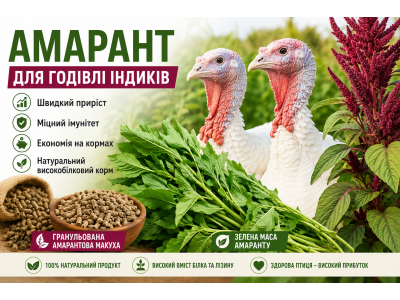
Amaranth for Turkey Feeding: How to Achieve Faster Growth, Strong Immunity, and Lower Feed CostsTurkeys require large amounts of high-quality protein, essential amino acids, vitamins, and minerals to achieve optimal growth and productivity. This is why more and more farmers are turning to amaranth—a unique forage crop that helps improve poultry performance while reducing feed costs.Amaranth can be used both as fresh green forage and as pelleted amaranth press cake. Combining these two products provides excellent nutritional support for turkeys at all stages of growth. Amaranth is rich in high-quality protein, lysine, calcium, phosphorus, carotenoids, and other biologically active compounds that contribute to healthy development and rapid weight gain.Why Grow Amaranth for Green Forage?Amaranth is one of the highest-yielding forage crops available. Under favorable growing conditions, it can produce between 100 and 200 tons of green biomass per hectare. Its protein content significantly e..
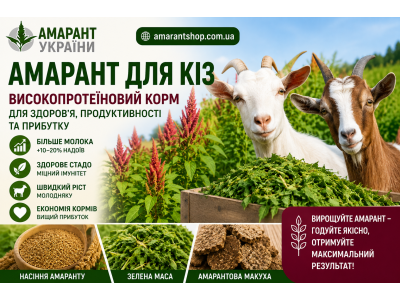
Why Are More Goat Farmers Choosing Amaranth?Modern goat farming requires high-quality and cost-effective feed sources. That is why more and more farmers are turning to amaranth—a highly productive crop that produces large amounts of green biomass, contains significant levels of protein, and helps reduce the cost of concentrated feeds.Depending on growing conditions, amaranth can produce 60–120 tons of green biomass per hectare. Its leaves and stems are rich in protein, calcium, magnesium, and other essential nutrients. In terms of protein content, amaranth forage often surpasses corn and many traditional forage crops.Benefits of Amaranth for GoatsRegular feeding of fresh amaranth forage helps:Improve appetite;Accelerate growth of young animals;Increase milk production;Enhance milk protein and fat content;Strengthen the immune system;Improve reproductive performance of the herd.Amaranth is particularly valuable because it contains lysine, an essential amino acid often lacking in convent..
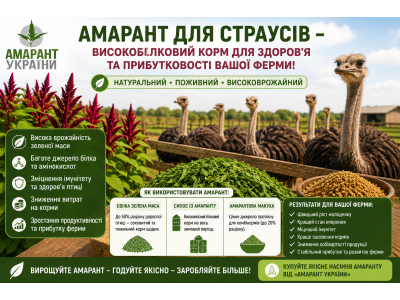
Why Are Ostrich Farmers Choosing Amaranth More Often?Ostrich farming is a business where every kilogram of feed affects production costs. That is why farmers are constantly looking for crops that combine high yield, nutritional value, and economic efficiency.One of the most promising crops is amaranth. Its green biomass and amaranth oil cake can partially replace expensive protein feeds while providing ostriches with valuable amino acids, minerals, and vitamins.Why Amaranth?Unlike most forage crops, amaranth combines:High green biomass yield;Elevated protein content;Rich amino acid profile;Excellent drought tolerance;Rapid regrowth after cutting;Low production costs.Amaranth green biomass contains significant amounts of protein, calcium, magnesium, potassium, and carotenoids, which are essential for the growth of young birds and the productivity of adult ostriches.How to Use Amaranth in Ostrich FeedingOption 1. Fresh Green BiomassThe simplest way to use amaranth is to feed freshly harv..

Imagine a plant that combines a vibrant ruby-red color, a delicate nutty flavor, and true natural power. That is exactly what red amaranth microgreens are — one of the most valuable superfoods in modern healthy nutrition.This is not just a beautiful garnish for your meals. It is a living source of vitamins, antioxidants, and minerals that your body receives in the most natural and easily absorbable form.Why Microgreens?Microgreens are young plant shoots harvested 7–14 days after germination. At this stage, the plant contains the highest concentration of biologically active nutrients.Red amaranth microgreens are especially valued for their high content of: natural antioxidants; plant protein; chlorophyll; amino acids; B vitamins; vitamins C, E, and K; calcium, magnesium, iron, and potassium. They are often called “living energy” for the body.What Vitamins Are Found in Red Amaranth Microgreens?Vitamin C — Immune SupportHelps the body: strengthen the..

Classic Amaranth Cultivation Technology: Over 30 Years of Experience Amaranth is a high-yielding crop that rewards growers only when strict technological protocols are followed. Based on our extensive experience, we have prepared this step-by-step guide for farmers and agricultural enterprises.1. Crop Rotation & PrecursorsThe best yields are achieved when amaranth follows:Black or green fallow;Cereals and legumes.2. Soil PreparationAutumn Preparation (Primary)Weed Control: Treatment with non-selective herbicides based on glyphosate (e.g., Roundup).Primary Tillage: Plowing to a depth of 20–25 cm. Plowing consistently yields better results compared to disc harrowing.Perennial Weed Control: If the field is infested with creeping thistle or field bindweed, repeat glyphosate treatment (3–5 L/ha) after discing once weeds emerge. In late autumn, perform deep cultivation with harrowing to level the surface.Spring Preparation (Pre-sowing)Moisture Conservation: Early spring harrowing.Cult..
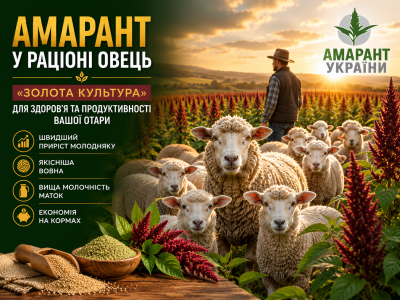
Amaranth in Sheep Diets: The "Golden Crop" for Your Flock’s Health and ProductivityIn search of the ideal feed that combines high nutritional value, low maintenance, and improved animal health, farmers are increasingly turning to amaranth. Once known as the "Inca grain," this ancient plant is now becoming a true superfood in modern sheep farming.Why should you include amaranth in your sheep's diet? Let’s break it down.Why is Amaranth Superior to Traditional Fodder?Compared to traditional forage grasses or even alfalfa, amaranth offers several significant advantages:Exceptional Nutrition: Amaranth contains more protein (up to 18–20% in dry matter) and has a better amino acid profile than most cereals. Its high lysine content is particularly valuable.Squalene and Vitamins: The presence of squalene—a unique antioxidant—strengthens the immune system, helping sheep resist infectious diseases.Drought Resistance: During hot summer months when pastures dry up, amaranth continues to actively pr..

In 2026, Ukraine's agricultural sector continues to face the challenges of climate change and unstable prices for traditional grains. While wheat and sunflower show predictable but low margins, amaranth is confidently leading in terms of profitability per hectare.1. Economic Indicators: How Much Can You Earn?Amaranth is a high-value-added crop. While the average profitability of corn fluctuates between 15–20%, for amaranth, this figure can reach 100% to 250%, depending on the variety and technology used.Market Price: Demand for organic and varietal amaranth in Europe and the domestic Ukrainian market is growing steadily. The price per ton of commodity grain is significantly higher than that of traditional cereals.Low Seeding Rate: Only 1–1.5 kg of seeds is required per hectare. This means minimal investment in planting material compared to almost any other crop.2. Comparative Table: Amaranth vs. Traditional CropsTo understand the real perspective, let's compare the costs and potential ..
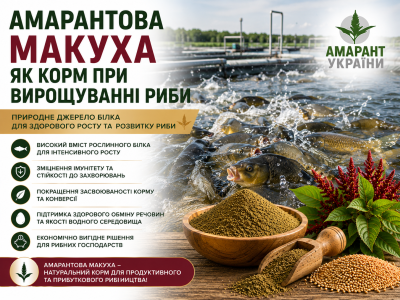
Amaranth meal (also known as amaranth meal) is a valuable addition to fish diets in aquaculture due to its rich nutritional composition and beneficial properties.Benefits of amaranth meal for fish farming:• High protein content: Amaranth meal contains up to 20% protein, and in terms of lysine (an essential amino acid), it is twice as high as wheat protein. This high protein content with a balanced amino acid composition contributes to the rapid growth of fish, their healthy development and weight gain.• Rich amino acid profile: Amaranth contains 18 of the 20 essential amino acids (both essential and non-essential), which is unique among plant crops and makes it a complete source of protein.• Source of healthy fats: The meal contains healthy fats, the main part of which is unsaturated fatty acids (oleic, linoleic, linolenic).• Contains micro- and macroelements: Amaranth cake is rich in pectins, micro- and macroelements that are important for the overall health and immunity of fish.• Imp..
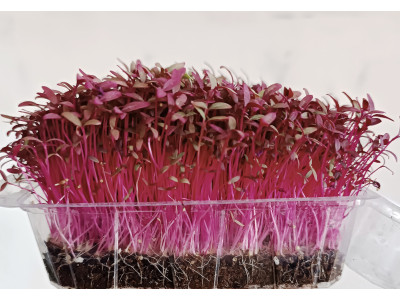
Amaranth is a unique plant, the amount of vitamins, minerals, biologically active substances beneficial to the body, proteins and amino acids in it is simply off scale. Among the cereals, fruits, vegetables and other plants that we eat, its competitors in the most important parameter - the health benefits are far behind. But most importantly, the amaranth champion in the plant world in terms of squalene, and it saturates the cells of the body with oxygen, and rejuvenates and heals the skin from any diseases and problems. In this article we will talk about the germination of amaranth seed and the newfangled, but showed itself from the best side product - microgrin. After all, these two ways of using amaranth make it possible to get maximum benefit for the organism. Sprouted Amaranth Sprouted amaranth, a unique product that will help you with the treatment and prevention of many diseases. But you need to know how to properly germinate and consume it. Features of amaranth Any ..
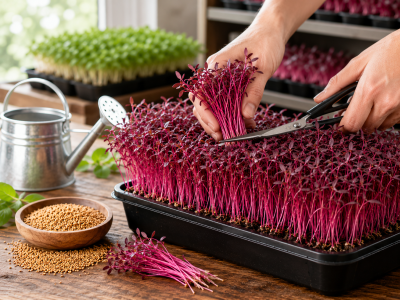
Microgreens: A Superfood Powerhouse on Your WindowsillMicrogreens are young vegetable greens and herbs harvested just 7–14 days after sowing. During this rapid growth phase, the plant’s concentration of vitamins and minerals is 5 to 40 times higher than in its mature counterparts.Health Benefits of MicrogreensThese young sprouts are a true "superfood." Rich in fiber and antioxidants, they provide a holistic boost to your body:Detox & Cleansing: High fiber content aids in flushing out toxins and improving digestion.Anti-Aging: Packed with antioxidants (such as rutin and Vitamin C), they protect cells from aging and enhance skin radiance.Hair & Nail Vitality: Their regenerative properties strengthen nail plates and stimulate hair growth.Cardiovascular Support: Helps lower "bad" cholesterol levels and maintain healthy blood pressure.Immune Boost: A potent dose of natural vitamins supports overall energy and immunity.Amaranth — The Microgreen ChampionAmaranth microgreens deserve sp..
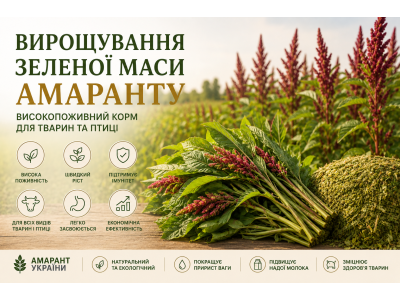
Amaranth as a High-Protein Fodder Crop: Benefits and Practical RecommendationsIntegrating amaranth into livestock farming is one of the most effective ways to enhance feed quality. Due to its high nutritional value and balanced amino acid profile, this crop is essential for providing complete nutrition to livestock and poultry, especially in protein-deficient environments.Key Advantages of AmaranthHigh Yield: The green mass yield exceeds that of corn by 20–40%, averaging 100–200 tons per hectare.Protein Quality: The protein content in amaranth is 1.8 times higher, and lysine is 3 times higher than in corn.Drought Resistance: The plant requires 2–2.5 times less water than legumes or cereal crops.Transpiration Efficiency: Amaranth has a transpiration coefficient of 250 (compared to 300 for sorghum, 330 for corn, and 515 for wheat).1. Green Fodder Production and UseAmaranth is a tall annual plant (150–300 cm) with succulent, fleshy stems. Its green mass consists of leaves (40–60%), stems ..
