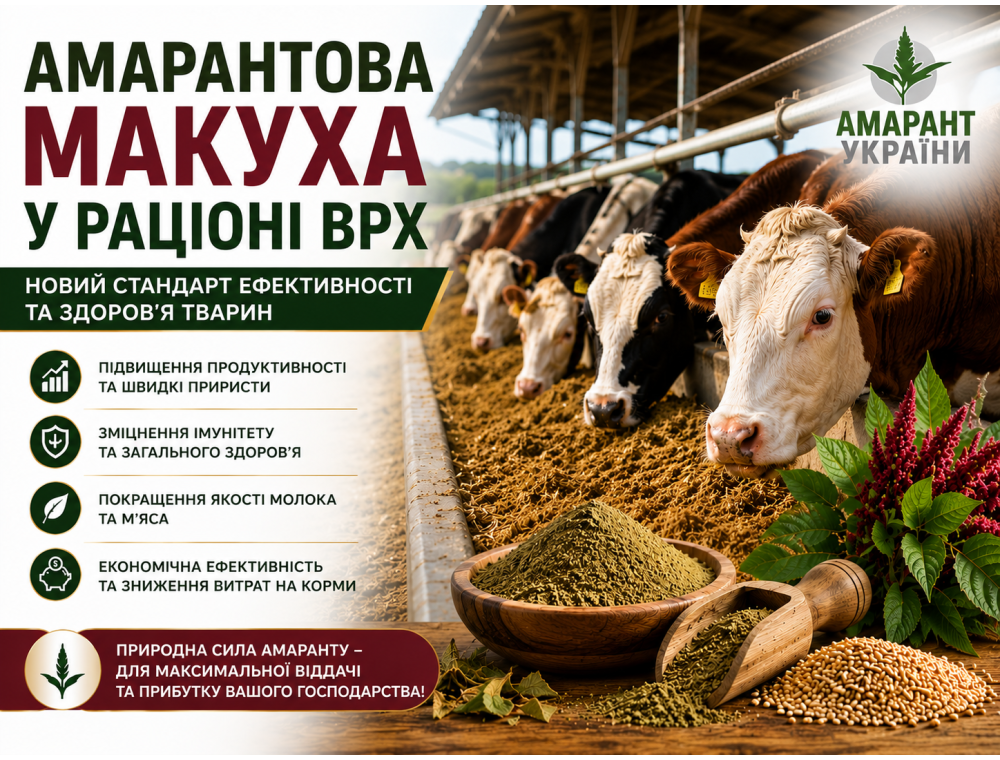
In search of alternative high-protein feed sources, modern farms are increasingly turning to amaranth. Amaranth press cake is the byproduct remaining after the cold-pressing of oil from amaranth seeds. Due to its unique chemical composition, it is a powerful competitor to traditional soybean and sunflower meals.
In this article, we will examine research results and the practical application of amaranth cake in cattle nutrition.
What Makes Amaranth Cake Special?
Unlike many other feed additives, amaranth contains squalene — a potent antioxidant and immunostimulant — and features an ideally balanced amino acid profile.
Nutritional Comparison:
| Parameter | Average Value | Advantage for Cattle |
| Crude Protein | 18–25% | High lysine content, critical for growth |
| Fiber | 7–10% | Promotes normalization of rumen function |
| Residual Fats | 6–8% | Energy boost and source of Vitamin E |
| Squalene | up to 1% | Boosts immunity, reduces inflammatory processes |
Results for Dairy Herds
Studies show that including amaranth cake in the cows' diet (at 10–15% of the total concentrate mass) yields the following results:
Increased Milk Yield: Average daily yields increase by 7–12% due to improved protein digestibility.
Enhanced Milk Quality: Fat content rises by 0.2–0.4%, along with protein levels. The milk becomes enriched with vitamins and minerals, increasing its value for cheese production.
Extended Lactation: Animals maintain high productivity longer without physiological depletion.
Impact on Calves and Beef Cattle
Average Daily Gains: Increased by 15–20%. Calves gain muscle mass more rapidly rather than fat.
Livestock Viability: Squalene and the vitamin complex significantly reduce the incidence of respiratory and gastrointestinal infections.
Feed Conversion: Improved by 8–10%, allowing for savings on the total volume of feed.
Veterinary Aspect: Health Above All
Reproductive Function: Cows recover faster after calving, and the service period is shortened.
Liver and Metabolism: Unlike soybean meal, amaranth is easier to digest and does not overload the liver with toxic compounds (provided proper storage).
Note: Amaranth cake is gluten-free and has a low content of anti-nutritional factors, making it safe for long-term use.
Implementation Guidelines
Introduce the cake into the diet gradually over 7–10 days.
For dairy cows: optimal dose is 1.5–2.5 kg per day.
For calves (from 2 months old): 0.3–0.5 kg per day.
Comments: