
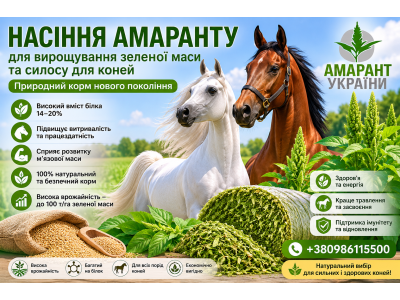
Amaranth Seeds for Growing Green Forage and Silage for Horses: A Natural Feed of the New GenerationAmaranth – A High-Yield Forage Crop for Horse BreedingModern horse breeding requires high-quality, safe, and nutritious feeds that support health, endurance, and excellent physical condition. One of the most promising forage crops is amaranth, a plant known for its exceptional nutritional value and high green biomass yield.Amaranth is successfully used for producing silage, haylage, and fresh green forage for ordinary horses, Arabian horses, sport horses, and breeding stock.Why Choose Amaranth?Compared with corn, alfalfa, and many traditional forage crops, amaranth offers several important advantages.Benefits of Amaranth Silage✅ High protein content – 14–20%✅ Higher lysine content than most cereal crops✅ Excellent digestibility of nutrients✅ Rich in calcium, magnesium, phosphorus, and iron✅ Contains natural antioxidants✅ Highly palatable to horses✅ Supports healthy muscle development✅ Imp..
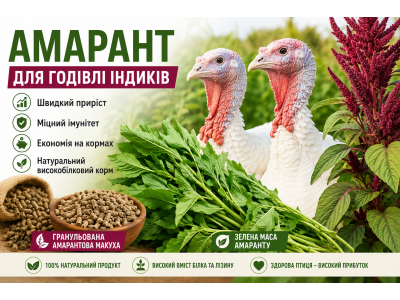
Amaranth for Turkey Feeding: How to Achieve Faster Growth, Strong Immunity, and Lower Feed CostsTurkeys require large amounts of high-quality protein, essential amino acids, vitamins, and minerals to achieve optimal growth and productivity. This is why more and more farmers are turning to amaranth—a unique forage crop that helps improve poultry performance while reducing feed costs.Amaranth can be used both as fresh green forage and as pelleted amaranth press cake. Combining these two products provides excellent nutritional support for turkeys at all stages of growth. Amaranth is rich in high-quality protein, lysine, calcium, phosphorus, carotenoids, and other biologically active compounds that contribute to healthy development and rapid weight gain.Why Grow Amaranth for Green Forage?Amaranth is one of the highest-yielding forage crops available. Under favorable growing conditions, it can produce between 100 and 200 tons of green biomass per hectare. Its protein content significantly e..
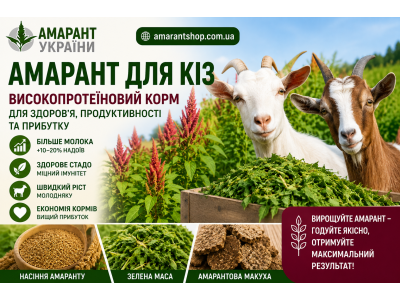
Why Are More Goat Farmers Choosing Amaranth?Modern goat farming requires high-quality and cost-effective feed sources. That is why more and more farmers are turning to amaranth—a highly productive crop that produces large amounts of green biomass, contains significant levels of protein, and helps reduce the cost of concentrated feeds.Depending on growing conditions, amaranth can produce 60–120 tons of green biomass per hectare. Its leaves and stems are rich in protein, calcium, magnesium, and other essential nutrients. In terms of protein content, amaranth forage often surpasses corn and many traditional forage crops.Benefits of Amaranth for GoatsRegular feeding of fresh amaranth forage helps:Improve appetite;Accelerate growth of young animals;Increase milk production;Enhance milk protein and fat content;Strengthen the immune system;Improve reproductive performance of the herd.Amaranth is particularly valuable because it contains lysine, an essential amino acid often lacking in convent..
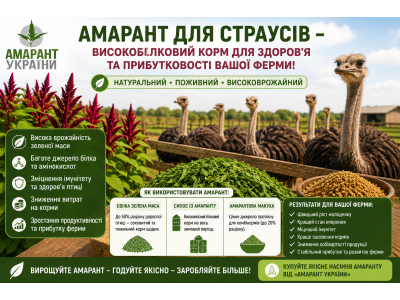
Why Are Ostrich Farmers Choosing Amaranth More Often?Ostrich farming is a business where every kilogram of feed affects production costs. That is why farmers are constantly looking for crops that combine high yield, nutritional value, and economic efficiency.One of the most promising crops is amaranth. Its green biomass and amaranth oil cake can partially replace expensive protein feeds while providing ostriches with valuable amino acids, minerals, and vitamins.Why Amaranth?Unlike most forage crops, amaranth combines:High green biomass yield;Elevated protein content;Rich amino acid profile;Excellent drought tolerance;Rapid regrowth after cutting;Low production costs.Amaranth green biomass contains significant amounts of protein, calcium, magnesium, potassium, and carotenoids, which are essential for the growth of young birds and the productivity of adult ostriches.How to Use Amaranth in Ostrich FeedingOption 1. Fresh Green BiomassThe simplest way to use amaranth is to feed freshly harv..
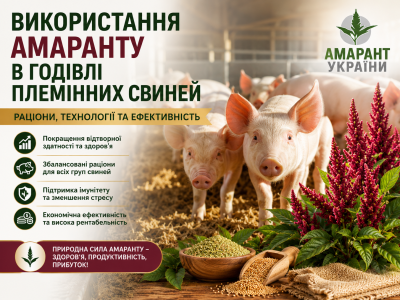
Amaranth for Pig Farming: Low-Cost Protein and Rapid Weight GainModern pig farming demands efficient solutions. As the prices of soybean meal and premixes continue to rise, farm profitability is at risk. Amaranth is a game-changing crop that allows you to produce your own high-quality protein, significantly reducing the cost of meat production.Why are leading farmers switching to amaranth? This powerhouse crop:Produces up to 60 tons of green biomass per hectare.Contains high-quality protein that outperforms most grains and legumes.Is the ideal feed for premium breeds like Mangalica, unlocking their potential for high-end marbled meat.The Biochemical Power of Amaranth: A Superfood for LivestockAmaranth is more than just forage; it is a nutritional concentrate. Its composition is engineered for results:High Protein Content: 16–20% in green mass and up to 30% in oil cake (meal).Lysine-Rich: Contains the essential amino acid responsible for muscle growth rather than fat accumulation.Squale..
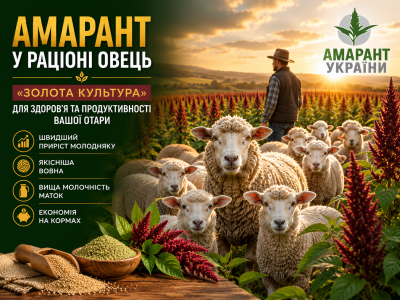
Amaranth in Sheep Diets: The "Golden Crop" for Your Flock’s Health and ProductivityIn search of the ideal feed that combines high nutritional value, low maintenance, and improved animal health, farmers are increasingly turning to amaranth. Once known as the "Inca grain," this ancient plant is now becoming a true superfood in modern sheep farming.Why should you include amaranth in your sheep's diet? Let’s break it down.Why is Amaranth Superior to Traditional Fodder?Compared to traditional forage grasses or even alfalfa, amaranth offers several significant advantages:Exceptional Nutrition: Amaranth contains more protein (up to 18–20% in dry matter) and has a better amino acid profile than most cereals. Its high lysine content is particularly valuable.Squalene and Vitamins: The presence of squalene—a unique antioxidant—strengthens the immune system, helping sheep resist infectious diseases.Drought Resistance: During hot summer months when pastures dry up, amaranth continues to actively pr..
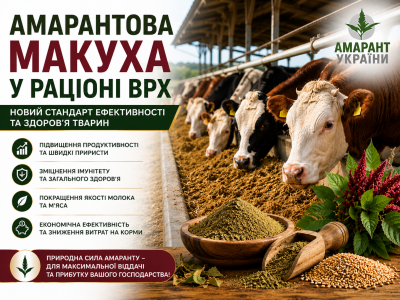
In search of alternative high-protein feed sources, modern farms are increasingly turning to amaranth. Amaranth press cake is the byproduct remaining after the cold-pressing of oil from amaranth seeds. Due to its unique chemical composition, it is a powerful competitor to traditional soybean and sunflower meals.In this article, we will examine research results and the practical application of amaranth cake in cattle nutrition.What Makes Amaranth Cake Special?Unlike many other feed additives, amaranth contains squalene — a potent antioxidant and immunostimulant — and features an ideally balanced amino acid profile.Nutritional Comparison:ParameterAverage ValueAdvantage for CattleCrude Protein18–25%High lysine content, critical for growthFiber7–10%Promotes normalization of rumen functionResidual Fats6–8%Energy boost and source of Vitamin ESqualeneup to 1%Boosts immunity, reduces inflammatory processesResults for Dairy HerdsStudies show that including amaranth cake in the cows' diet (at 10..
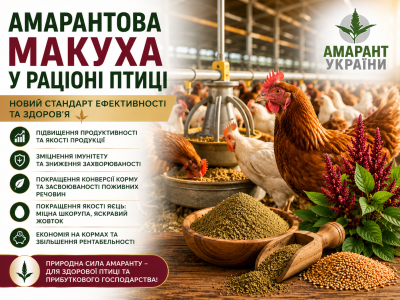
In the search for alternative protein sources and ways to reduce production costs, poultry farmers are increasingly turning to amaranth oil cake. This byproduct of oil extraction is a true "superfood," capable of significantly improving broiler growth rates and laying hen productivity.Why is Amaranth Oil Cake Beneficial?Unlike traditional sunflower or soybean meal, amaranth oil cake possesses a unique chemical composition:High Lysine Content: Amaranth surpasses most cereal crops in this essential amino acid.Squalene: A unique substance that boosts the birds' immunity and provides antioxidant effects.Highly Digestible Protein: The protein absorption coefficient of amaranth reaches 75–80%.Rich Mineral Profile: High levels of calcium, phosphorus, magnesium, and iron.Results for BroilersResearch and practical experience show that including amaranth oil cake in the diet of broiler chickens (averaging 5–10% of the total feed mass) yields the following results:Growth Rates and Feed Conversion..
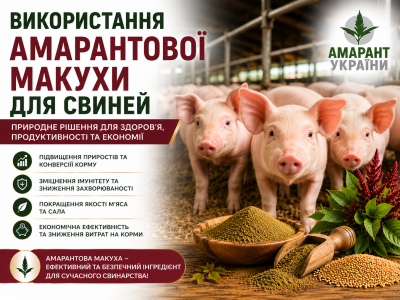
Using amaranth press cake in pig nutrition is a highly effective solution due to its unique amino acid profile (specifically high lysine content) and the presence of squalene. Press cake is a byproduct of oil extraction that retains most of the grain's proteins and beneficial nutrients.Below are the key results and indicators recorded during research and practical application:1. Impact on Productivity and Weight GainAmaranth press cake serves as a powerful growth stimulant due to its high-quality protein, which rivals animal-based proteins in quality.Average Daily Gain (ADG): Adding press cake to the diet (10–20% of the concentrate mass) can increase the growth rate of fattening pigs by 10–15%.Feed Conversion Efficiency: Due to better protein digestibility, feed intake per 1 kg of weight gain is reduced by 5–9%.Replacement Gilts: The growth rate of replacement gilts increases by an average of 11%.2. Indicators for Sows and PigletsAmaranth has a positive ef..
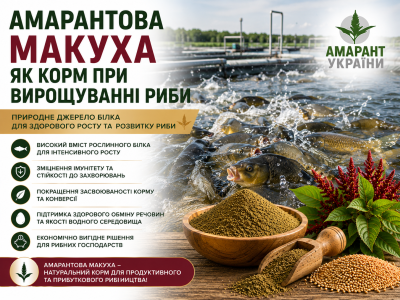
Amaranth meal (also known as amaranth meal) is a valuable addition to fish diets in aquaculture due to its rich nutritional composition and beneficial properties.Benefits of amaranth meal for fish farming:• High protein content: Amaranth meal contains up to 20% protein, and in terms of lysine (an essential amino acid), it is twice as high as wheat protein. This high protein content with a balanced amino acid composition contributes to the rapid growth of fish, their healthy development and weight gain.• Rich amino acid profile: Amaranth contains 18 of the 20 essential amino acids (both essential and non-essential), which is unique among plant crops and makes it a complete source of protein.• Source of healthy fats: The meal contains healthy fats, the main part of which is unsaturated fatty acids (oleic, linoleic, linolenic).• Contains micro- and macroelements: Amaranth cake is rich in pectins, micro- and macroelements that are important for the overall health and immunity of fish.• Imp..
