Why Are Ostrich Farmers Choosing Amaranth More Often?
Ostrich farming is a business where every kilogram of feed affects production costs. That is why farmers are constantly looking for crops that combine high yield, nutritional value, and economic efficiency.
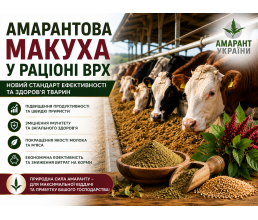
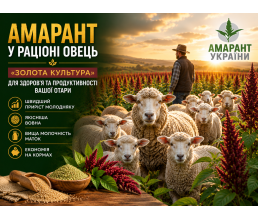
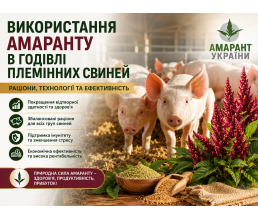
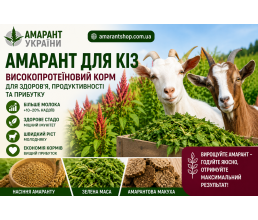
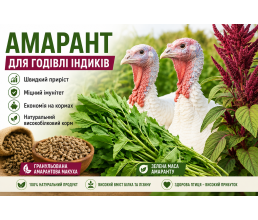
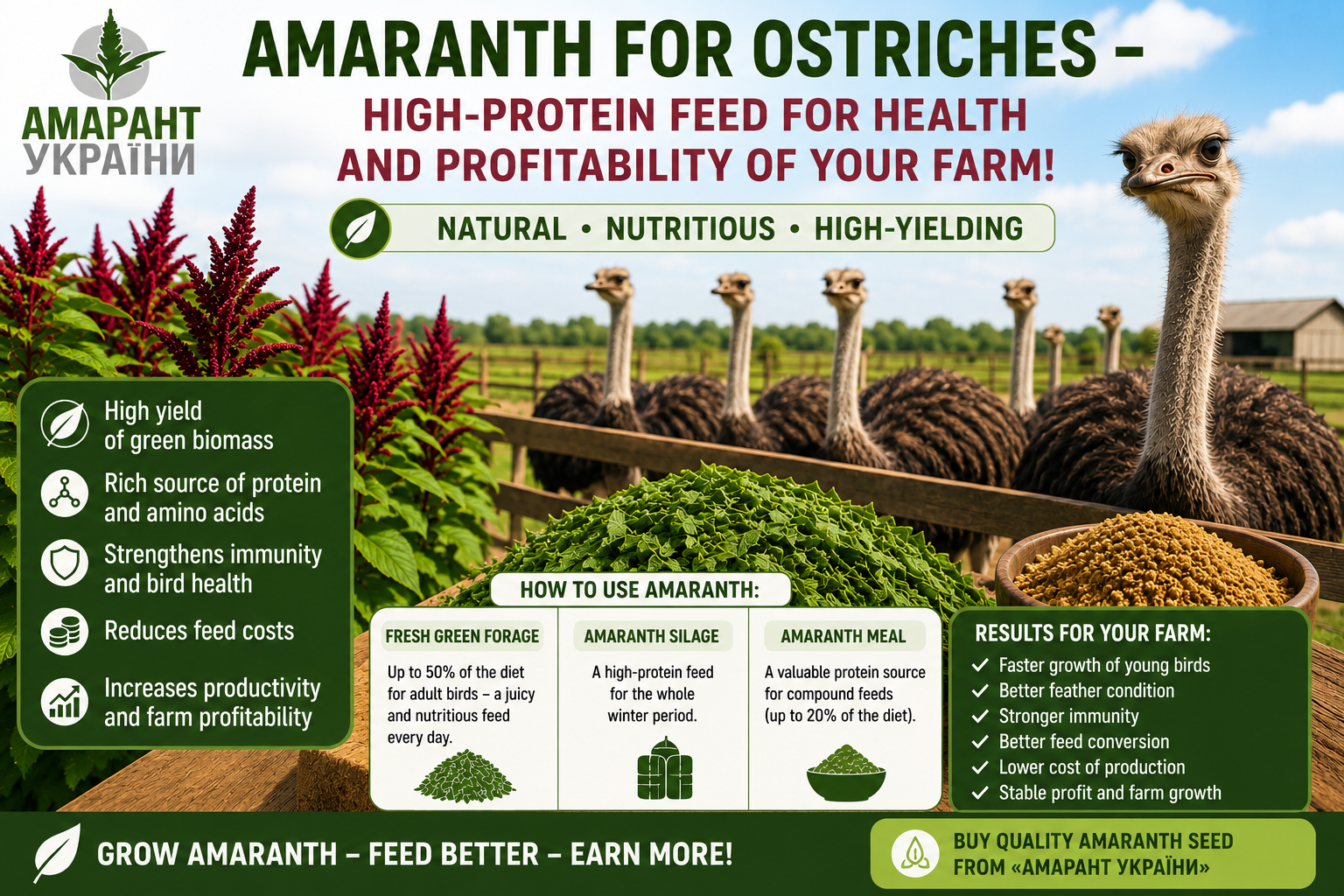
One of the most promising crops is amaranth. Its green biomass and amaranth oil cake can partially replace expensive protein feeds while providing ostriches with valuable amino acids, minerals, and vitamins.
Why Amaranth?
Unlike most forage crops, amaranth combines:
- High green biomass yield;
- Elevated protein content;
- Rich amino acid profile;
- Excellent drought tolerance;
- Rapid regrowth after cutting;
- Low production costs.
Amaranth green biomass contains significant amounts of protein, calcium, magnesium, potassium, and carotenoids, which are essential for the growth of young birds and the productivity of adult ostriches.
How to Use Amaranth in Ostrich Feeding
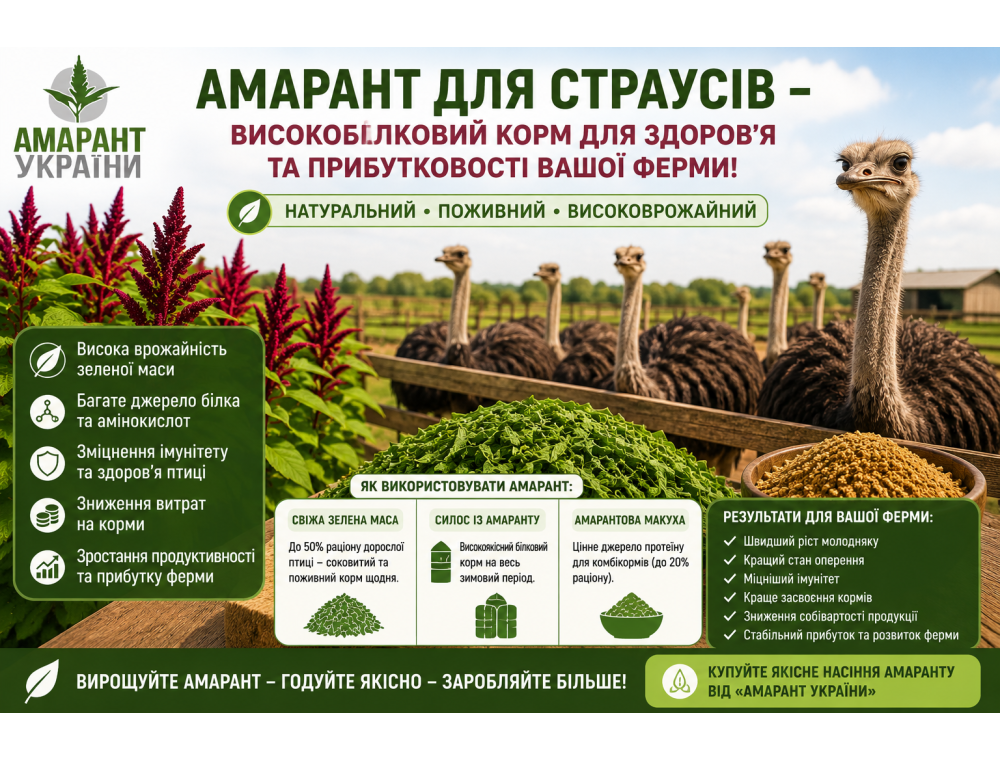
Option 1. Fresh Green Biomass
The simplest way to use amaranth is to feed freshly harvested green biomass daily.
Recommended diet structure for adult ostriches:
- 40–50% fresh amaranth green biomass;
- 20–30% alfalfa or other forage crops;
- 20–30% grain mixture.
Ostriches readily consume amaranth because of its succulent leaves and tender stems.
Option 2. Amaranth Silage
For farms with larger flocks, amaranth can be ensiled alone or mixed with corn.
This provides a high-quality protein feed source throughout the winter season.
Option 3. Amaranth Oil Cake
Amaranth oil cake, a by-product of cold-pressed amaranth oil production, contains high levels of protein, fiber, and residual oil.
Recommended inclusion rates in compound feed:
- Chicks and young birds: 5–10%;
- Growing birds: 10–15%;
- Adult ostriches: up to 20%.
Example Diet for an Adult Ostrich
Daily ration per bird:
- 2.5–3.0 kg fresh amaranth green biomass;
- 0.8–1.0 kg grain mix (corn, wheat, barley);
- 0.3–0.5 kg amaranth oil cake;
- Mineral supplements and clean water.
Such a ration provides sufficient energy, protein, and essential minerals to support optimal productivity.
What Results Can Be Expected from Feeding Amaranth?
Farmers report several important benefits:
Faster Growth Rates
High-quality protein and essential amino acids support improved weight gain and muscle development.
Better Feather Condition
Natural antioxidants and minerals contribute to healthier plumage and skin condition.
Stronger Immune System
Vitamins and biologically active compounds help maintain bird health and reduce susceptibility to disease.
Improved Feed Utilization
The highly digestible protein in amaranth promotes better nutrient absorption and feed efficiency.
Financial Benefits for Ostrich Farmers
1. Reduced Feed Costs
Amaranth can partially replace expensive protein ingredients such as:
- Soybean meal;
- Sunflower meal;
- Imported protein concentrates.
2. High Yield from Limited Land
Even a few hectares of amaranth can produce substantial quantities of green biomass throughout the growing season.
3. Drought Resistance
During dry years, amaranth often outperforms traditional forage crops, reducing the risk of feed shortages.
4. Additional Revenue Streams
In addition to green forage, farmers can also produce:
- Amaranth grain;
- Amaranth oil;
- Amaranth oil cake for on-farm use or commercial sale.
Why Buy Amaranth Seed Today?
Amaranth is more than just a forage crop. It is an investment in lower production costs, improved flock performance, and greater farm sustainability.
By planting amaranth, you gain:
✓ A high-protein green feed source;
✓ Valuable oil cake for feed formulations;
✓ Excellent drought tolerance;
✓ Lower feed purchasing costs;
✓ Additional opportunities for profit.
Order high-quality amaranth seed today and provide your ostriches with the feed crop of the future!
Comments: