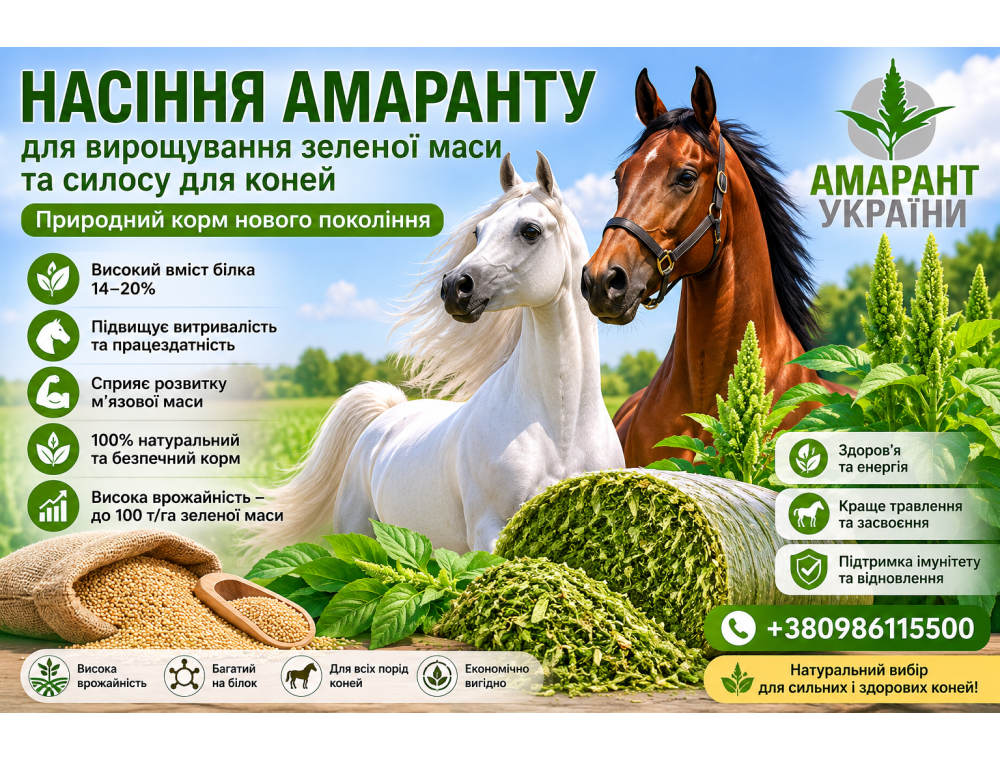
Amaranth Seeds for Growing Green Forage and Silage for Horses: A Natural Feed of the New Generation
Amaranth – A High-Yield Forage Crop for Horse Breeding
Modern horse breeding requires high-quality, safe, and nutritious feeds that support health, endurance, and excellent physical condition. One of the most promising forage crops is amaranth, a plant known for its exceptional nutritional value and high green biomass yield.
Amaranth is successfully used for producing silage, haylage, and fresh green forage for ordinary horses, Arabian horses, sport horses, and breeding stock.
Why Choose Amaranth?
Compared with corn, alfalfa, and many traditional forage crops, amaranth offers several important advantages.
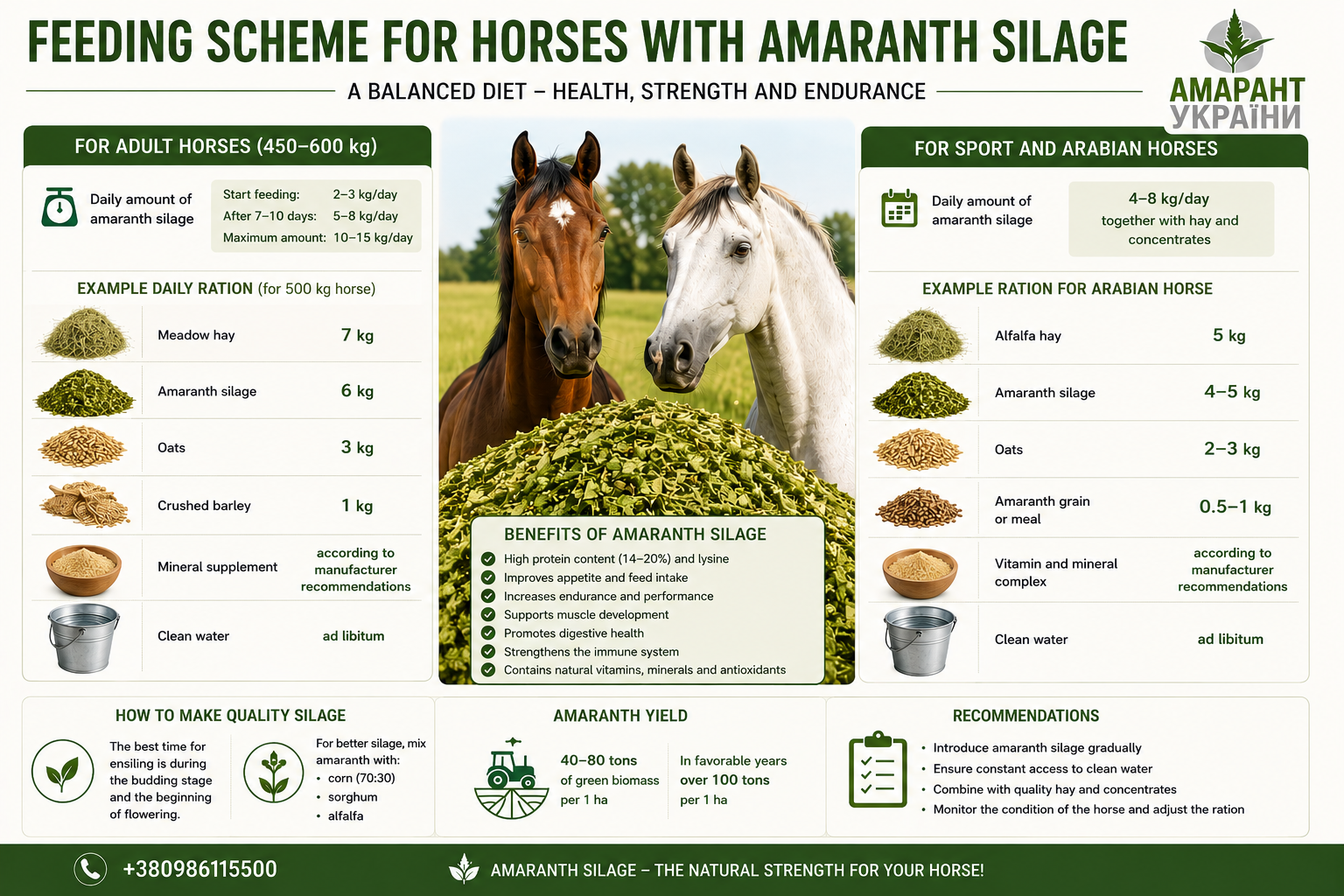
Benefits of Amaranth Silage
✅ High protein content – 14–20%
✅ Higher lysine content than most cereal crops
✅ Excellent digestibility of nutrients
✅ Rich in calcium, magnesium, phosphorus, and iron
✅ Contains natural antioxidants
✅ Highly palatable to horses
✅ Supports healthy muscle development
✅ Improves endurance and performance
✅ Drought and heat tolerant
✅ Produces exceptionally high yields of green biomass
Nutritional Value of Amaranth Silage
On average, 1 kg of quality amaranth silage contains:
| Parameter | Value |
|---|---|
| Dry Matter | 25–35% |
| Crude Protein | 12–18% |
| Crude Fiber | 18–25% |
| Metabolizable Energy | 9–11 MJ |
| Calcium | 0.8–1.5% |
| Phosphorus | 0.3–0.5% |
Results of Feeding Horses with Amaranth Silage
Practical experience from farms indicates the following benefits:
- Improved appetite
- Shiny, healthy coat
- Faster recovery after exercise
- Better muscle development
- Increased endurance in performance horses
- Improved digestive health
- Reduced dependence on expensive protein concentrates
The benefits are particularly noticeable in sport horses and Arabian horses, where stamina, strength, and overall performance are critical.
Recommended Feeding Rates for Amaranth Silage
Adult Horses (450–600 kg Body Weight)
Introduce gradually into the diet:
- Initial feeding: 2–3 kg per day
- After 7–10 days: 5–8 kg per day
- Maximum recommended amount: 10–15 kg per day
Sport Horses and Arabian Horses
Recommended daily intake:
- 4–8 kg of amaranth silage
- Combined with hay and concentrate feeds
Amaranth silage should not be used as the sole feed but as a valuable component of a balanced ration.
Example Diet for a Sport Horse (500 kg)
- Meadow hay – 7 kg
- Amaranth silage – 6 kg
- Oats – 3 kg
- Rolled barley – 1 kg
- Mineral supplement – according to manufacturer recommendations
- Unlimited access to clean water
Example Diet for an Arabian Horse
- Alfalfa hay – 5 kg
- Amaranth silage – 4–5 kg
- Oats – 2–3 kg
- Amaranth grain or amaranth meal – 0.5–1 kg
- Vitamin and mineral supplement
How to Produce High-Quality Amaranth Silage
The best time for harvesting amaranth for silage is during the budding stage and the beginning of flowering.
At this stage, the plants contain maximum levels of:
- Protein
- Natural sugars
- Amino acids
- Essential minerals
For optimal fermentation, amaranth can be mixed with:
- Corn (70:30 ratio)
- Sorghum
- Alfalfa
Amaranth Yield Potential
Depending on growing conditions, amaranth can produce:
- 40–80 tons of green biomass per hectare
- More than 100 tons per hectare under favorable conditions
This allows horse farms to produce large quantities of high-quality forage at a competitive cost.
Amaranth Seeds for Forage Production
Amaranth Ukraine offers premium-quality amaranth seeds for green forage production and silage making.
Our Advantages
✓ High germination rate
✓ Professional cultivation support
✓ Feeding recommendations for horses
✓ Nationwide and international delivery
✓ Agronomic assistance from sowing to harvest
Order amaranth seeds today and provide your horses with a high-protein forage that supports superior health, endurance, performance, and long-term productivity.
Comments: