Amaranth Meal vs. Amaranth Flour: How to Make the Right Choice?
Many customers believe that amaranth meal (shrot) and amaranth flour are the same product. In reality, these are two fundamentally different products that vary in composition, production methods, and health benefits. Understanding this difference will help you choose a truly valuable product and avoid wasting money on "empty" fillers.
What is Amaranth Meal Exactly?
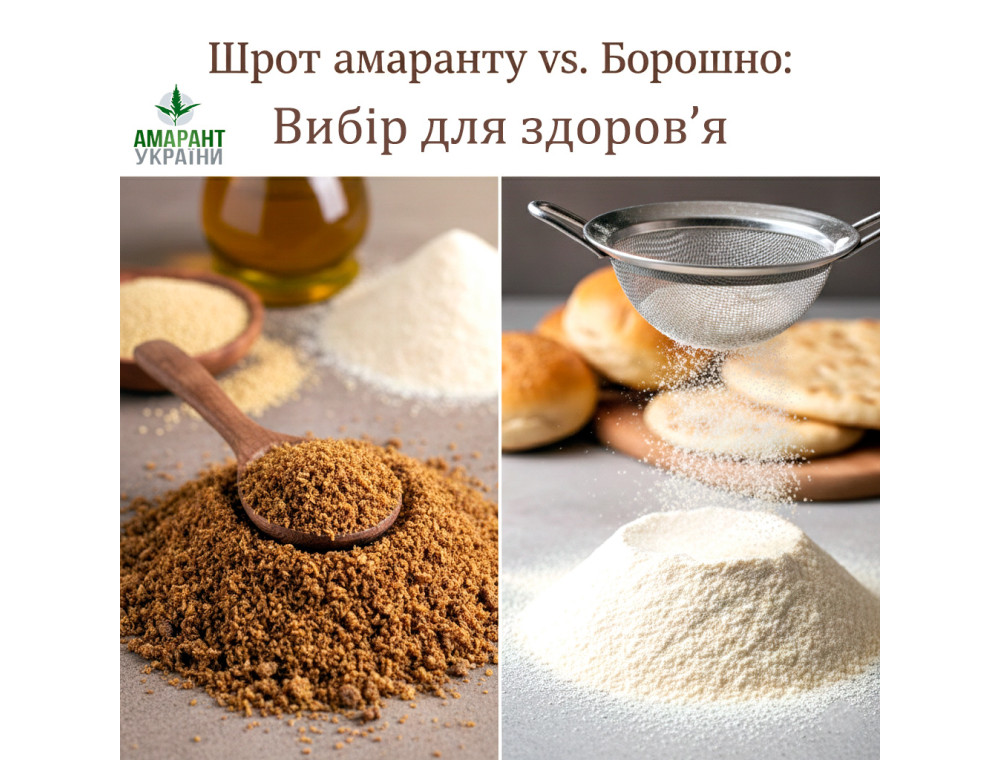
Amaranth meal (shrot) is a byproduct—a secondary raw material—left over after the oil has been extracted from the amaranth seeds.
Oftentimes, manufacturers market meal as "full-fat flour" or "whole grain flour" to maximize profits. However, it is crucial to keep the following in mind:
If the oil was extracted using a hot-press method, almost no nutrients remain in the meal.
Traditionally, meal is used as a valuable animal feed additive, not as a primary food source for humans.
While it is high in fiber, it is stripped of amaranth’s greatest treasures: its natural oils and squalene.
Important: Most negative reviews regarding the "ineffectiveness" of amaranth stem from customers accidentally purchasing meal instead of genuine whole grain flour.
Using Amaranth Meal: Benefits and Limitations
Meal is often sold as a dietary product for weight loss. Since the fats (oils) have been removed, it is significantly lower in calories.
Pros of Amaranth Meal:
Effectively cleanses the intestines of toxins and mucus due to its coarse fiber.
Acts as a natural "brush" for the digestive system.
Cons:
Contains minimal amounts of vitamins and minerals.
Virtually zero squalene content.
Low nutritional value for cellular health.
Why Does Whole Grain Flour Cost More?
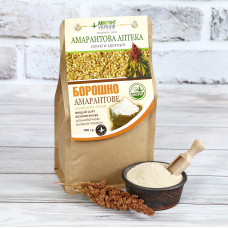
Real amaranth flour is produced by grinding whole, premium-grade seeds. This is a primary product that retains all vital components: the bran (source of vitamins and minerals) and the germ/endosperm (source of protein, fiber, and squalene).
Factors Influencing the Price of a Quality Product:
Raw Material Cost: Premium amaranth grain is several times more expensive than wheat.
Technology: Utilizing cold-milling methods on specialized equipment to prevent nutrient loss.
Logistics & Packaging: Specialized packaging is required to protect the flour from moisture and preserve active biological compounds.
If you see "flour" priced lower than the cost of the raw grain itself, you are likely looking at either meal or a blend diluted with cheaper fillers.
Comparison: Amaranth Meal vs. Whole Grain Flour
| Feature | Amaranth Meal (Shrot) | Whole Grain Amaranth Flour |
| Composition | Seed remains (defatted) | Full seed profile + natural oils |
| Squalene | Almost none | High content |
| Culinary Use | Dough becomes sticky and "runs" | Elastic dough; baked goods stay fresh longer |
| Primary Purpose | Intestinal cleansing | Immune support & cellular nutrition |
| Taste | Coarser, grass-like flavor | Delicate, nutty flavor |
Why Choose "Amaranth of Ukraine" Products?
Our company is a full-cycle enterprise. We don't just process raw materials; we are responsible for every single stage:
Our Own Fields: We grow amaranth without chemical fertilizers or herbicides.
German Engineering: We use high-precision cleaning lines to ensure our grain is free of impurities.
Cold Milling: We produce flour using methods that preserve the medicinal properties of the oil and squalene.
Certification: All products are eco-friendly and fully certified.
By purchasing from us, you are guaranteed 100% natural whole grain flour, not production waste.
Ready to boost your health with a true superfood?