Amaranth for Pig Farming: Low-Cost Protein and Rapid Weight Gain
Modern pig farming demands efficient solutions. As the prices of soybean meal and premixes continue to rise, farm profitability is at risk. Amaranth is a game-changing crop that allows you to produce your own high-quality protein, significantly reducing the cost of meat production.
Why are leading farmers switching to amaranth? This powerhouse crop:
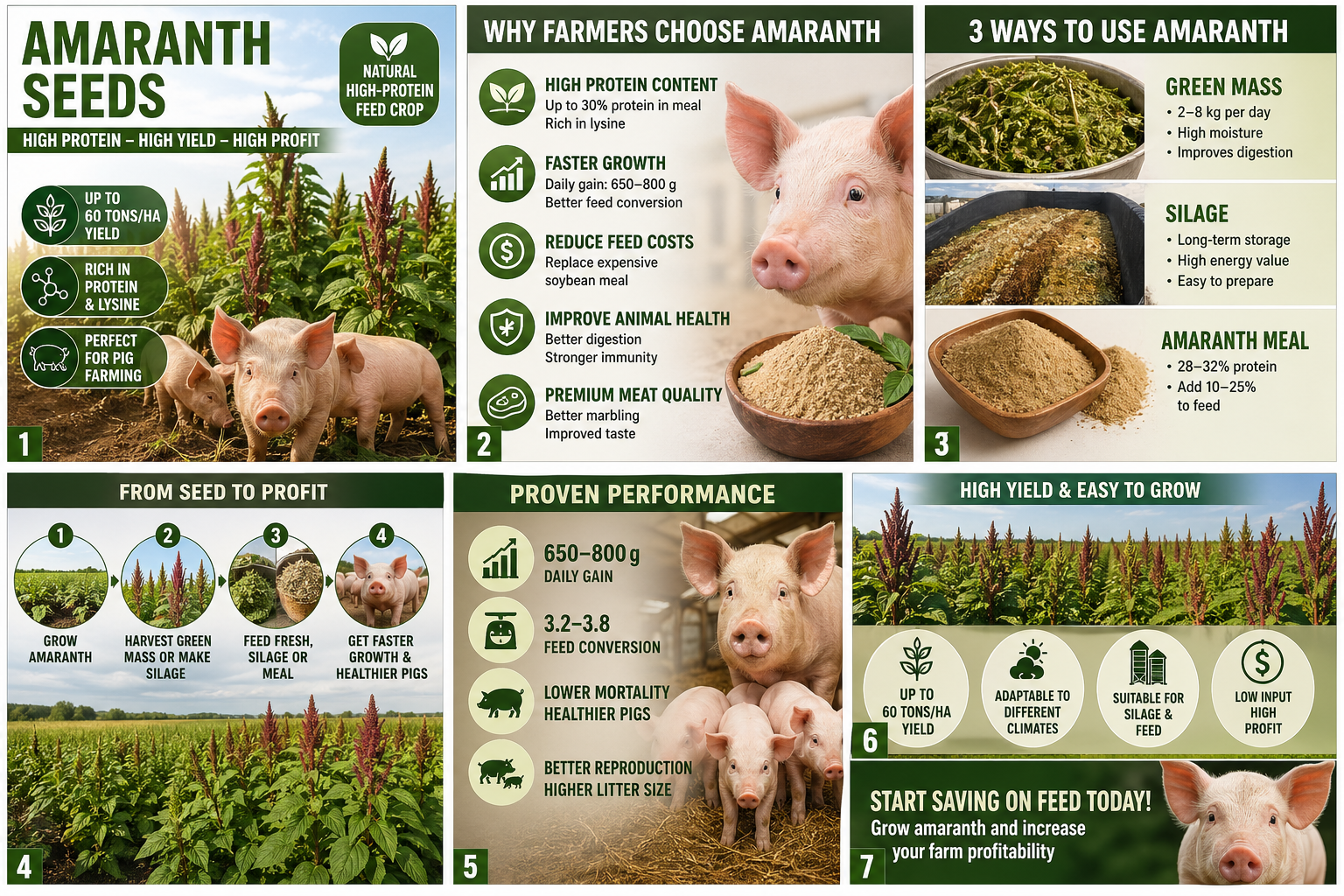
Produces up to 60 tons of green biomass per hectare.
Contains high-quality protein that outperforms most grains and legumes.
Is the ideal feed for premium breeds like Mangalica, unlocking their potential for high-end marbled meat.
The Biochemical Power of Amaranth: A Superfood for Livestock
Amaranth is more than just forage; it is a nutritional concentrate. Its composition is engineered for results:
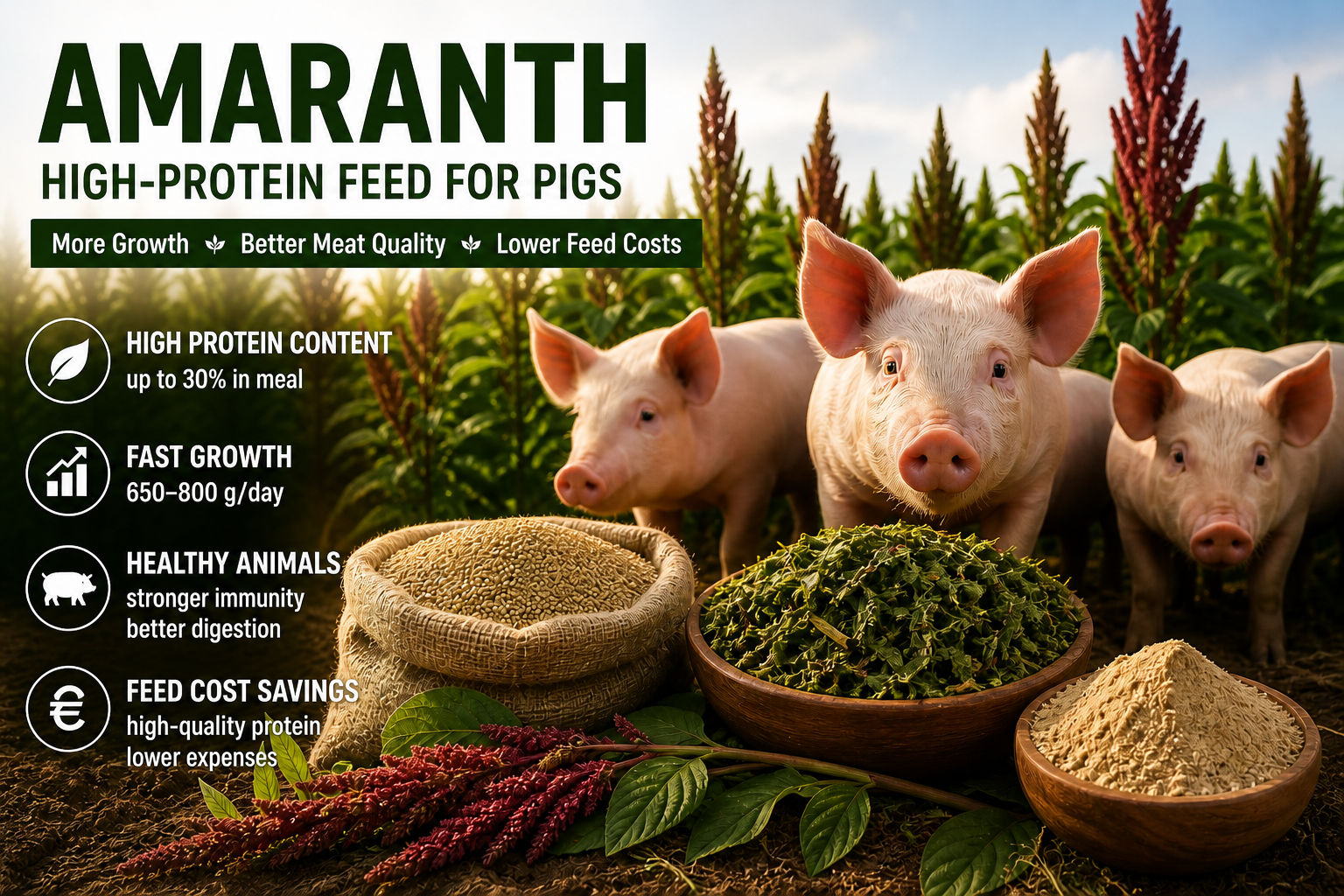
High Protein Content: 16–20% in green mass and up to 30% in oil cake (meal).
Lysine-Rich: Contains the essential amino acid responsible for muscle growth rather than fat accumulation.
Squalene: A unique natural antioxidant that boosts immunity and reduces the need for antibiotics.
High Digestibility: Protein digestibility reaches 85%, ensuring minimal waste.
How to Use Amaranth: 3 Feeding Methods
1. Fresh Green Mass (The Most Cost-Effective Feed)
The best option for the summer season. Fresh greens stimulate appetite and optimize gastrointestinal health.
Piglets: 2–4 kg per day.
Adults: 4–8 kg per day.
2. Amaranth Silage (Winter Ration)
Ensures stable weight gain during the cold season. Amaranth retains its nutritional value exceptionally well when ensiled with other crops.
Optimal Mix: Amaranth (60-70%) + Corn (20-30%) + Legumes or pulp (10%).
Rate: 3–6 kg per day.
3. Amaranth Oil Cake (Concentrated Pellets/Meal)
A direct replacement for expensive soybean meal. It contains 28–32% protein and 6–8% healthy fats.
Dosage: 10–25% of the total compound feed mix.
Proven Feeding Rations for Different Groups
Balancing the diet is the key to profit. Use these professional proportions:
Fattening Phase (60–100 kg weight)
Grains: 50%
Corn: 20%
Amaranth Oil Cake: 15%
Amaranth Silage: 10–15%
Premix: 2–3% Result: Average daily gain of 650–800g, with improved flavor profiles in both lard and meat.
Sows
Grains: 40–50%
Amaranth Oil Cake: 10–15%
Green Mass: 4–6 kg (summer) or Silage: 2–3 kg (winter) Result: Increased litter size, healthier piglets, and higher milk production.
Boars (Breeders)
Grains: 50%
Amaranth Oil Cake: 20%
Green Mass: 3–5 kg Result: Improved reproductive activity and semen quality.
Why Invest in Amaranth Seeds Now?
Growing your own amaranth is a strategic investment for any farm:
Economic Independence: Reduce your reliance on volatile market prices for protein supplements.
Resilience: Amaranth is drought-resistant, providing stable yields even in harsh weather conditions.
Premium Product Quality: Produce meat with superior marbling and taste, highly valued by restaurants and specialty retailers.
Implementation Tips:
Introduce amaranth into the diet gradually over 7–10 days.
For maximum absorption, we recommend chopping the green mass before feeding.
When preparing silage, maintain a moisture level of 60–70%.
Ready to Boost Your Farm’s Profitability?
Order high-protein amaranth seeds from our online store today. We offer only tested varieties optimized for livestock nutrition.
Our customers receive:
Detailed cultivation technology guides.
Assistance in selecting the right variety for your region.
Professional consultations on feed ration calculations.
Take the step toward high-quality, low-cost feed today! Browse our catalog and select your amaranth seeds.
Comments: